
Why These Conversations Matter More Than Ever
Talking to adult children about estate and insurance plans is one of the most loving acts you can do for your family—yet two-thirds of high-net-worth adults surveyed by RBC Wealth Management in 2024 admitted they’ve put off this conversation. If you’re here, you’re already ahead of most families.
Here’s what you need to know right now:
- Start early – Don’t wait until a health crisis. The average person doesn’t begin planning for a parent’s end of life until age 50 (when their parent is 70).
- Be transparent – Share what documents you have (will, trust, power of attorney, healthcare directive), where they’re stored, and who’s responsible for what.
- Discuss insurance – Explain life insurance policies, long-term care plans, and final expense coverage so your children know what’s in place.
- Address sensitive topics – If you’re dividing assets unequally or have specific medical wishes, explain your reasoning now to prevent confusion or hurt later.
- Make it ongoing – This isn’t one talk. Plan to update your family whenever your plans or health status changes.
The numbers tell the story: more than 60% of Canadians with parents aged 65+ haven’t started discussing care or financial needs, and approximately one in three Americans who receive an inheritance lose it all within two years. These conversations aren’t just about money—they’re about preventing family conflict, honoring your wishes, and giving your children the gift of clarity when they need it most.
At ShieldWise, we’ve guided countless families through the process of talking to adult children about estate and insurance plans, helping them find the right words and the right coverage to protect what matters most. This guide will walk you through every step—from when to start the conversation to what documents you need and how to explain complex topics in plain language.
Basic talking to adult children about estate and insurance plans glossary:
- End of Life Planning Checklist for Seniors and Families
- How to Coordinate Medicare Long Term Care and Final Expense
Why Talking to Adult Children About Estate and Insurance Plans is Crucial

Many of us view our financial lives as private. We were raised in an era where “money talk” was considered impolite. However, staying silent about your legacy can create a heavy burden for your children later. Research from RBC Wealth Management shows that two-thirds of high-net-worth individuals delay these talks, often out of a desire to avoid discomfort. But the risks of silence far outweigh the temporary awkwardness of a Sunday afternoon chat.
When you engage in talking to adult children about estate and insurance plans, you are essentially providing them with a roadmap. Without it, they are left to navigate the complex world of probate and End of Life Expenses while grieving. A study by Altogether found that most people don’t start planning for a parent’s end of life until they are 50 and the parent is 70—often leaving very little time to adjust plans if health declines rapidly.
Openness also ensures Final Expense for Family and Adult Children are handled according to your wishes, rather than a best guess by a stressed-out relative. By being transparent about your wealth transfer, you help ensure inheritance sustainability. Nearly 33% of heirs blow through their inheritance within two years. Education and conversation are the best defenses against that outcome.
The Risks of Silence and Delayed Planning
What happens if you don’t talk? In Illinois, if you die without a will (intestate), state law decides how your assets are distributed, which may not align with your actual desires. Beyond the legalities, silence breeds sibling rivalry. When children are left in the dark about why certain decisions were made, they may fill that void with resentment or suspicion.
Delayed planning also ignores the very real Final Expense Cost and Quotes that hit families immediately after a loss. Furthermore, waiting until cognitive decline begins makes legal documentation much harder to execute. If a parent is no longer considered of “sound mind,” they cannot legally sign new powers of attorney or trust documents, potentially forcing the family into a costly and public court-supervised guardianship.
Benefits of Proactive Transparency for Heirs
On the flip side, transparency offers profound emotional closure. When your children know your plan, they can focus on their relationship with you rather than worrying about the “what ifs.” Proactive discussion fosters financial literacy; it’s an opportunity to teach your children about Affordable Insurance Solutions for Retirees and the importance of long-term stability.
By providing clear directives, you reduce the decision-making stress on your heirs. They won’t have to argue over whether you wanted a burial or cremation, or which child should manage the family home. You are preserving your legacy not just through money, but through the harmony you leave behind.
When and How to Initiate the Conversation
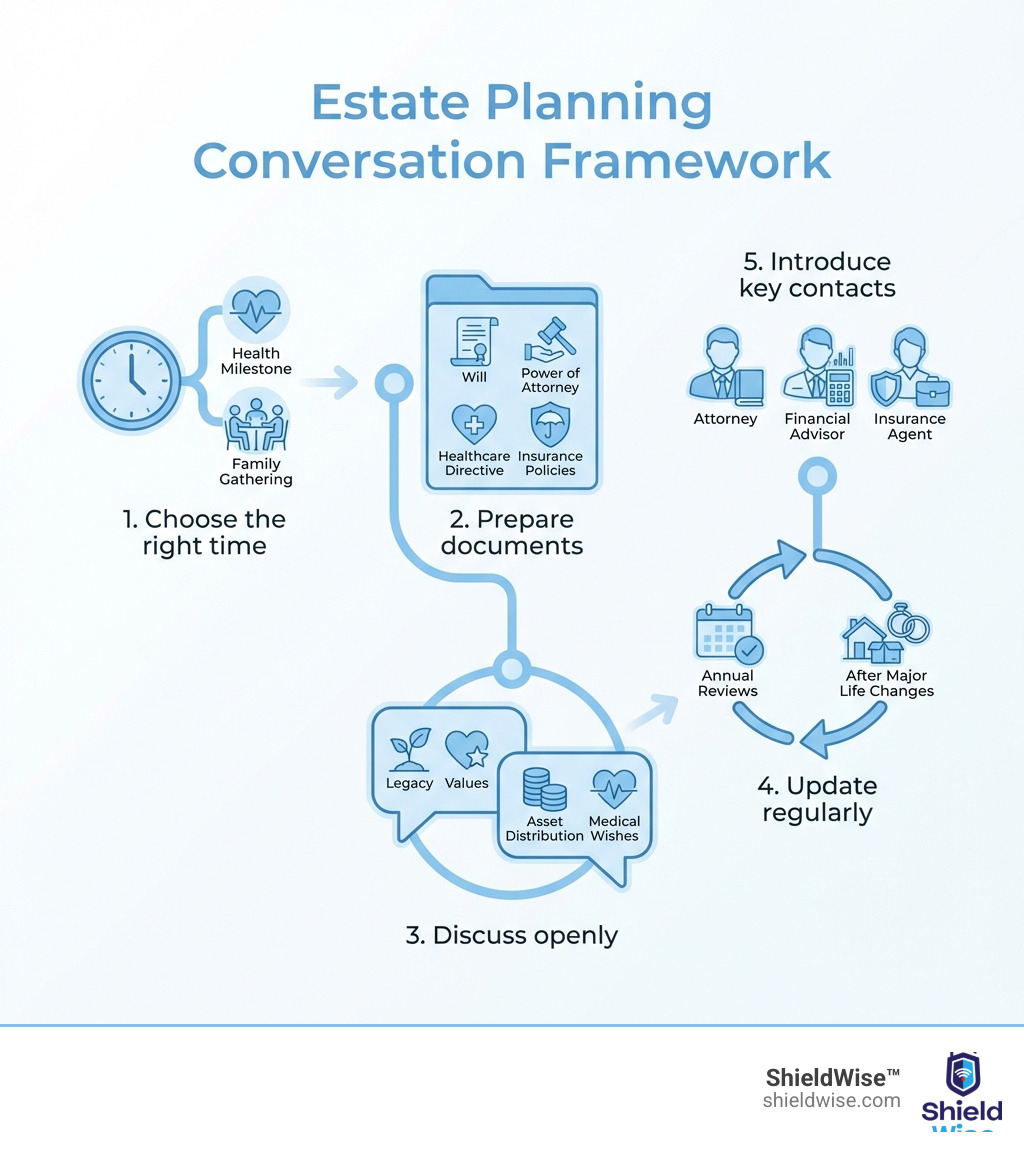
The “perfect time” rarely exists, but some moments are better than others. We recommend choosing a neutral, quiet environment—not a high-stress holiday dinner where emotions are already running high. The goal is to make it a series of small, manageable chats rather than one overwhelming “State of the Union” address.
Resources like The Conversation Project’s Starter Guide can provide a helpful framework. You might start by saying, “I’ve been working on our End of Life Planning Checklist for Seniors and Families, and I’d love to share some of my thoughts with you so you aren’t surprised later.”
Strategies for Talking to Adult Children About Estate and Insurance Plans Without Conflict
If your children seem resistant, try a “soft entry.” Ask for their advice on your retirement goals or share a story about a friend who went through a difficult probate process. This shifts the focus from “I’m planning for my death” to “I’m looking for your input on my future.”
Focus on shared values. Talk about the legacy of hard work or the importance of education that you want your estate to support. If you are discussing Medicare for Caregivers and Adult Children, frame it as a way to ensure you receive the best care possible without placing an unfair physical or financial burden on them. An empathy-first approach—acknowledging that this is a tough topic for them, too—can melt away a lot of tension.
Identifying the Right Time for the “Money Talk”
Milestones are natural triggers for these discussions. Are you nearing retirement? Have you recently updated your will? Has there been a change in your health? These are all valid reasons to pull the kids aside.
Even if you are in perfect health, being proactive is key. You might mention that you’ve secured Life Insurance for Seniors No Waiting Period to ensure immediate expenses are covered. This gives everyone peace of mind that the “business” side of life is handled, allowing the family to focus on making memories.
Essential Documents and Financial Information to Share
Once you’ve broken the ice, it’s time to get specific. You don’t necessarily need to show every bank balance if you aren’t comfortable, but your children must know where the documents are and what they signify.
At a minimum, you should discuss:
- Wills and Trusts: Who is the executor? Who is the trustee?
- Powers of Attorney: Who makes financial decisions if you can’t?
- Healthcare Directives: What are your wishes for medical intervention?
- Insurance Policies: We recommend sharing a What is an IUL Complete Guide if you use an Indexed Universal Life policy for retirement and legacy.
- Digital Assets: In our modern world, passwords for bank accounts, social media, and even utility bills are essential.
Explaining Complex Components of Your Estate and Insurance Plans
Don’t let legal jargon stop the conversation. You can explain a Trust as a “bucket” that holds your assets to keep them out of court, while a Will is a set of instructions for anything left outside that bucket.
Explain that an Executor is the person who pays the final bills and hands out the inheritance, while a Trustee manages money over the long term. If you use Indexed Universal Life for Retirement, explain that it’s a tool that provides a death benefit but also has a cash value that grows with the market.
When discussing Using Life Insurance in Retirement Planning, clarify how the death benefit will be paid out. Mention terms like “per stirpes”—which just means if one of your children passes away before you, their share goes to their own children (your grandkids).
The Role of Insurance in Your Legacy Strategy
Insurance is the “safety net” of your estate plan. Whether it’s a standard life policy or a Burial Insurance Complete Guide, these tools provide immediate liquidity.
Long-term care insurance is particularly vital to discuss. As the Genworth 2024 Cost of Care Survey points out, the costs of assisted living and home health aides are skyrocketing. By having Final Expense Insurance in place, you ensure that your children aren’t forced to pay out-of-pocket for your funeral or final medical bills. Clarifying What Are Final Expenses helps them understand that this coverage is designed to handle everything from the memorial service to outstanding credit card balances.
Navigating Sensitive Topics and Family Dynamics
Talking about money is hard; talking about nursing homes and cognitive decline is harder. It helps to have the facts on hand.
| Type of Care | Estimated Monthly Cost (National Avg) | Illinois Specific Considerations |
|---|---|---|
| Home Health Aide (44 hrs/wk) | ~$5,000 – $6,000 | Varies by county; higher in Chicago area |
| Assisted Living Facility | ~$4,500 – $5,500 | Illinois has specific “Supportive Living” programs |
| Nursing Home (Private Room) | ~$9,000 – $10,000 | Costs have risen ~5% annually since 2021 |
Addressing Unequal Asset Distribution and Rationale
Sometimes, equality isn’t the same as fairness. Perhaps one child has acted as a primary caregiver for years, or another child received a significant “early inheritance” for a down payment on a house. If you plan to distribute assets unequally, transparency is your best friend.
Explain your rationale clearly. Use Final Expense Basics and Education to show that you are thinking about the practical needs of each family member. If you don’t explain the “why” now, your children may spend years wondering “why” after you’re gone, which can permanently damage sibling relationships.
Planning for Long-Term Care and Medical Wishes
Do you want to stay in your home as long as possible? Would you prefer a specific assisted living community in Illinois? Discussing Activities of Daily Living (ADLs)—like bathing, dressing, and eating—helps your children recognize when you might need more help.
Review Medicare.gov Long-term care info together so they understand that standard Medicare does not cover long-term custodial care. This is where Final Expense End of Life Planning and End of Life Coverage become essential parts of the conversation.
Frequently Asked Questions about Estate Planning
How do I explain the difference between a will and a trust to my children?
Think of a will as a letter to a judge that says, “Here is who I want to have my stuff.” It usually has to go through a court process called probate. A trust is like a legal “box” you own while you’re alive. Because the box (the trust) owns the assets, it doesn’t have to go to court when you pass away—it just gets handed to the next person in charge.
What is the best way to handle an inheritance for a child who is irresponsible with money?
You can use a “spendthrift trust.” Instead of giving them a lump sum that they might blow through in two years, the trust can pay out smaller amounts over time (like a monthly allowance) or pay for specific things like rent and healthcare. You can also appoint a professional trustee to manage the money for them.
Where should I store my estate documents so my children can find them?
A fireproof safe at home is a good start, but make sure your executor has the code or a key! Some people use digital vaults or “legacy folders.” Avoid keeping the only copy in a bank safe deposit box, as these can be sealed by the bank upon your death, making it very difficult for your children to get the documents they need to start the process.
Conclusion
Talking to adult children about estate and insurance plans isn’t about focusing on the end of life; it’s about focusing on the quality of the life you are living now and the peace of mind you want for your heirs. By breaking the silence, you replace uncertainty with a plan and replace potential conflict with a shared understanding.
At ShieldWise, we believe that every family deserves clear, jargon-free guidance to secure their future. Whether you are looking for the right life insurance policy to fund your legacy or need to explore final expense options, we are here to help you protect what matters most.
Ready to take the next step in your Final Expense End of Life Planning? Let’s make sure your legacy is one of love, clarity, and security.