
Reviewed October 14, 2026. Educational information; individual circumstances, applicable rules and actual policy terms govern. Featured artwork is illustrative.
End-of-Life Planning Checklist: Documents, Contacts and Funding Questions
Start with a manageable record of your wishes, document locations and the people who may need to help. A checklist organizes questions; it does not create legal authority, a medical order or insurance coverage.
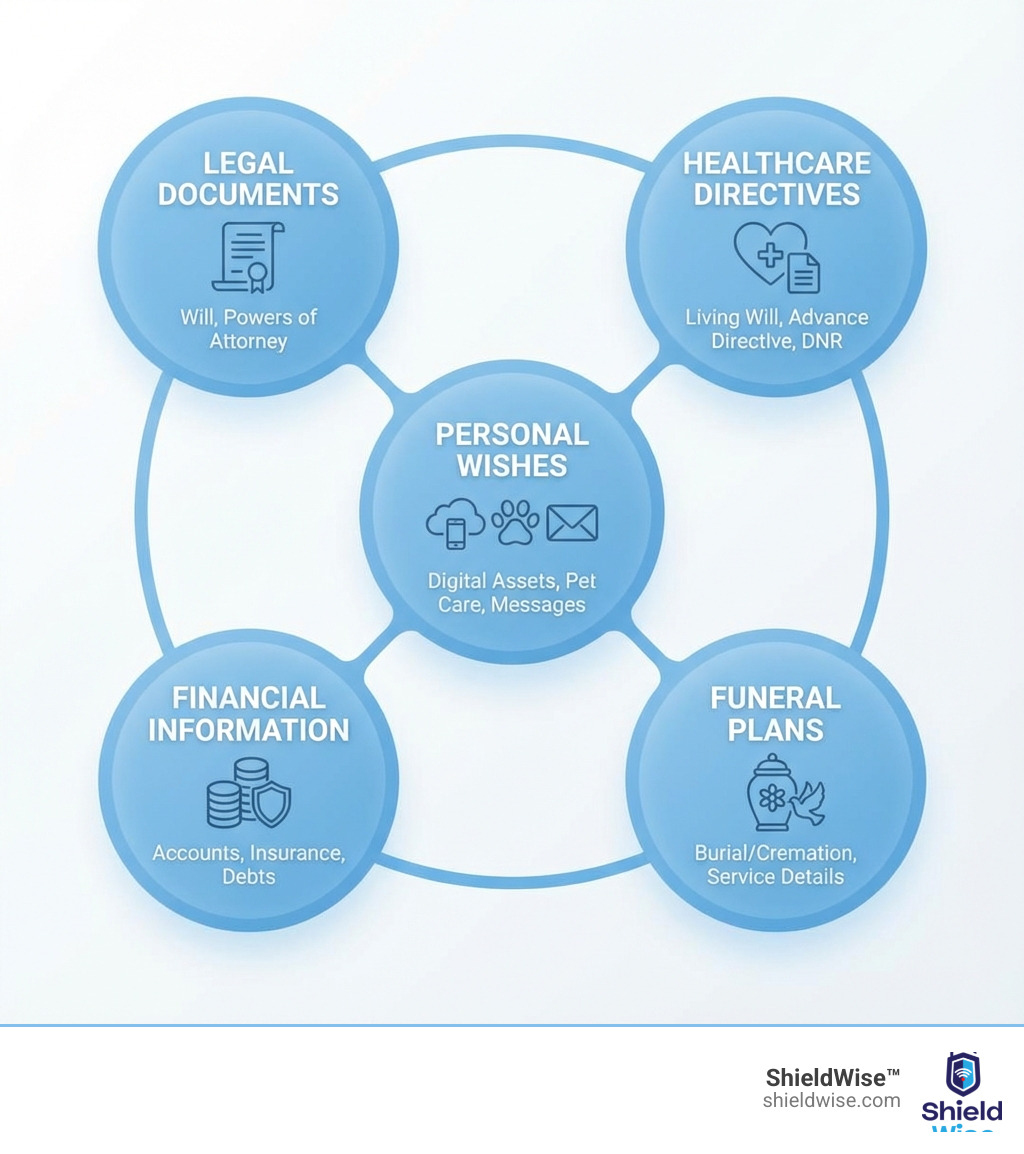
- Estate and financial decision documents to review with an appropriate adviser.
- Health care preferences and contacts to discuss with your care team.
- Accounts, policies and payment responsibilities to locate securely.
- Funeral preferences, expense estimates and possible funding sources.
- Digital records, personal items and dependent or pet-care arrangements.
Review Legal and Health Care Documents Separately
Ask an attorney familiar with the applicable jurisdiction what estate and financial documents fit your circumstances. Discuss future care preferences with your health care professional and the person you may wish to appoint.
For an Illinois example, IDPH describes advance directives and their different requirements. Use the resources and forms that apply where you receive care; do not assume one state’s rules apply everywhere.
Distinguish Estate Instructions, Care Preferences and Medical Orders
Estate documents and health care documents address different decisions. Ask which assets and arrangements your estate documents govern, and which documents communicate treatment preferences or appoint a health care decision maker.
A discussion or informal note is not automatically an emergency medical order. IDPH’s Illinois guidance explains that a Uniform POLST requires the applicable individual or authorized representative signature and an attending practitioner’s signature. Review relevant medical orders with your care team.
Confirm Authority, Scope and Alternates
A financial representative and a health care representative can have different roles. Ask what each appointment authorizes, when it takes effect, how it can be changed and what institutions require to recognize it.
Discuss willingness and practical availability with the proposed people and alternates. Naming someone in a family checklist does not itself appoint them. Do not assume any power of attorney eliminates every need for court or institutional review.
Create a Secure Records Inventory
List institutions, policy or account types, professional contacts, recurring payments and where supporting documents are stored. Use only the identifying detail needed for the person’s role.
Keep passwords, recovery codes, complete identity numbers and sensitive records out of an ordinary shared checklist. Access to credentials is different from permission or legal authority to use an account.
Estimate Expenses and Check Funding
Record itemized local estimates, existing coverage, accessible funds and prepaid arrangements intended for those expenses. Check who can access funds, what documents are required and when they might be available.
The FTC’s funeral planning guidance suggests questions about prepaid services, cancellation, provider closure and moving. Do not assume every prepaid arrangement locks all prices or transfers without cost.
Check any SSA lump-sum death payment, VA burial allowances or local assistance directly with the relevant agency. Eligibility, filing requirements and limits matter; do not count unconfirmed benefits as available money.
Review Existing Insurance before Adding Coverage
Locate the insurer, policy status, owner, insured person, beneficiary designation and contact information. Ask about benefit guarantees, premium requirements, exclusions and any early-benefit restrictions.
Confirm claim requirements and plan for expenses due before payment arrives. Our final-expense basics and fixed-income guides help compare need and cost. Insurance does not automatically fund every expense or provide immediate cash.
Track What Is Ready and What Needs Review
For each item, record its location, date, relevant contact and next action. Use simple statuses such as “located,” “needs review” and “shared with the appropriate person.”
Separate missing information from completed appointments or executed documents. A saved draft, unsigned form or informal agreement is not the same as a completed legal arrangement.
Keep Funeral Preferences Easy to Find
Write down preferences for arrangements, service details, key contacts and any existing contracts. Ask providers about applicable restrictions and costs. Tell the appropriate people where the preferences can be found.
The FTC advises keeping funeral preferences accessible rather than relying on a will that may be found only after arrangements are made. A preference record and a prepaid contract are different things.
Plan for Digital Records and Personal Wishes
Inventory important digital accounts and records, then check each service’s authorized-representative or legacy process. Protect credentials and recovery material separately, and arrange access appropriate to the person’s authority.
Record wishes for photos, correspondence, personal items and messages. Ask about legal and service requirements rather than assuming a password grants the right to manage every account.
Identify immediate care contacts for dependents and pets, with practical instructions available to the people who need them.
Review after Changes
Revisit the record after changes in health, relationships, residence, finances, appointed people or beneficiaries. Check that professional documents and institutional records still reflect the intended arrangements.
Share updates with the relevant people and care providers. A private note about a change does not automatically amend a policy, beneficiary designation or legal document.
Invite the People You Want Involved
Choose whom to involve and how much information each person needs. Ask whether they are willing and able to carry out the proposed role, and allow time for questions.
Our family conversation guide provides a way to organize that discussion.

Discuss Roles without Assuming Agreement
Explain your wishes, document locations and professional contacts. Distinguish practical help from authority to make decisions. Record unresolved questions for the appropriate professional.
A family meeting cannot guarantee agreement or change legal priorities. If pressure or disagreement makes discussion difficult, consider separate conversations or qualified support.
Use Resources Matched to the Question
- Care team: medical preferences, orders and treatment questions.
- Appropriate attorney: estate documents, appointments and local legal processes.
- Insurer or licensed agent: existing policy terms and available offers.
- Relevant institution or agency: account access, claims and benefit requirements.
The Eldercare Locator is a public service for finding community resources for older adults and families. Do not assume an insurance website prepares legal documents or provides clinical decisions.
Common Planning Questions
These questions help identify what to review. The answers do not resolve an individual estate or medical decision.
What if There Is No Will?
Ask a local attorney which estate assets would be governed by intestacy rules and which arrangements use beneficiary designations, joint ownership or other documents. The treatment depends on the facts and applicable law.
Do not assume every asset goes to the state, every asset passes through the same process, or a family preference is legally binding without the required steps.
What Should the Family Prepare for after a Death?
Keep care-team, local authority and funeral-provider contacts available. If there may be a medical emergency, contact emergency services. Otherwise, follow the appropriate professional instructions for the circumstances.
Identify who can locate documents, coordinate arrangements and contact institutions. Ask which death certificates, authority documents and claims are required. Do not move funds or use another person’s login simply because you can access it.
How Can Pet Care Be Arranged?
Ask a willing caregiver and an alternate about immediate care. Record food, medicines, veterinary contacts and routines where they can be found.
Discuss longer-term funding and any legal arrangement with an appropriate adviser. A note naming a caregiver does not by itself establish a binding guardianship or trust.
Start with the Next Practical Step
Locate one document, confirm one contact or arrange one professional review. Keep track of what remains uncertain and who can answer it.
For help evaluating insurance for a parent, use our parent-planning guide. Clear records, verified terms and appropriate authority matter more than a promise that everything is settled.