
Understanding How Indexed Universal Life Builds Cash Value
How index universal life builds cash value is a question many people ask when they first hear about IUL policies—and the answer is simpler than you might think.
How IUL Builds Cash Value (Quick Answer):
- Premium Payment Split – Part of your premium covers insurance costs and fees; the rest goes into your cash value account
- Index Crediting – Cash value earns interest based on the performance of a market index (like the S&P 500)
- Caps and Floors – Your gains are capped at a maximum rate (often 8-12%), but a floor (typically 0%) protects you from losses
- Tax-Deferred Growth – Your cash value grows without annual taxes, and you can access it through loans or withdrawals
- Long-Term Accumulation – Meaningful growth usually takes 2-5 years; significant value often builds after 10-20 years
The key difference from other permanent life insurance is that your cash value isn’t directly invested in the market. Instead, the insurance company uses a formula to credit interest based on index performance—giving you some upside potential with built-in downside protection.
That said, IUL policies are complex. Returns are limited by caps and participation rates. Fees and insurance costs reduce your net growth. And if you don’t fund the policy consistently, it can underperform or even lapse—which is why almost 88% of universal life policies never pay out.
At ShieldWise™, we’ve spent years helping families and professionals understand how index universal life builds cash value, cutting through the complexity to show you what these policies actually do—and whether they fit your long-term goals. We’re here to give you clear, unbiased guidance so you can make informed decisions without sales pressure or jargon.
The Core Mechanics: How Index Universal Life Builds Cash Value
So, what exactly is indexed universal life insurance (IUL)? At its heart, an IUL policy is a type of permanent life insurance. This means it offers lifelong coverage, providing a death benefit to your beneficiaries when you pass away. But it’s more than just a death benefit; it also includes a cash value component that can grow over time. This cash value is where the “indexed universal life” part really shines, as its growth is linked to the performance of a market index, such as the S&P 500.
It’s crucial to understand that while the cash value growth is tied to an index, your money isn’t directly invested in the stock market. Think of it like this: the insurance company doesn’t put your premiums directly into stocks or bonds. Instead, they use a sophisticated strategy, often involving options, to mimic the index’s performance. This allows them to offer you growth potential without exposing your cash value to direct market losses. This distinction is important, and definitions and policy terminology in this section are adapted from guidance published by the Washington State Office of the Insurance Commissioner (WA OIC).
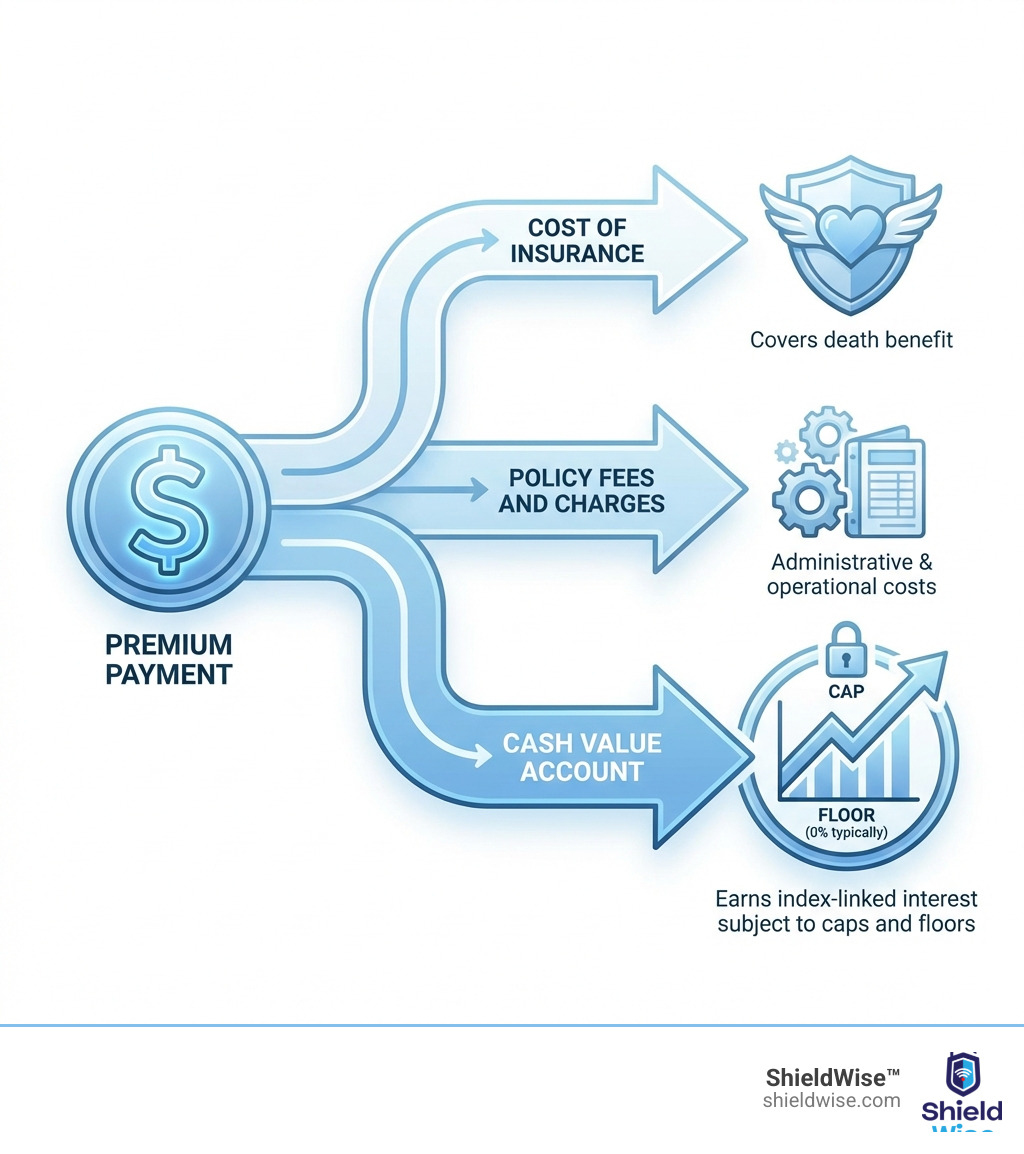
When you pay your premium for an IUL policy, that money doesn’t all go straight into your cash value account. It’s typically split into a few key areas. A portion covers the “Cost of Insurance” (COI), which is the actual cost of providing your death benefit. Another part goes towards administrative fees and other charges the insurance company incurs for managing your policy. Any remaining amount after these costs are covered is then allocated to your cash value account. This is the portion that has the potential to grow based on the chosen market index.
The factors that influence the rate of cash value growth in an IUL policy are multifaceted. They include the performance of the underlying market index, the specific caps, floors, and participation rates set by your policy (which we’ll dive into shortly), the fees and charges deducted from your policy, and, of course, the amount and consistency of your premium payments. Understanding these moving parts is key to grasping how index universal life builds cash value.
A Step-by-Step Look at How Index Universal Life Builds Cash Value
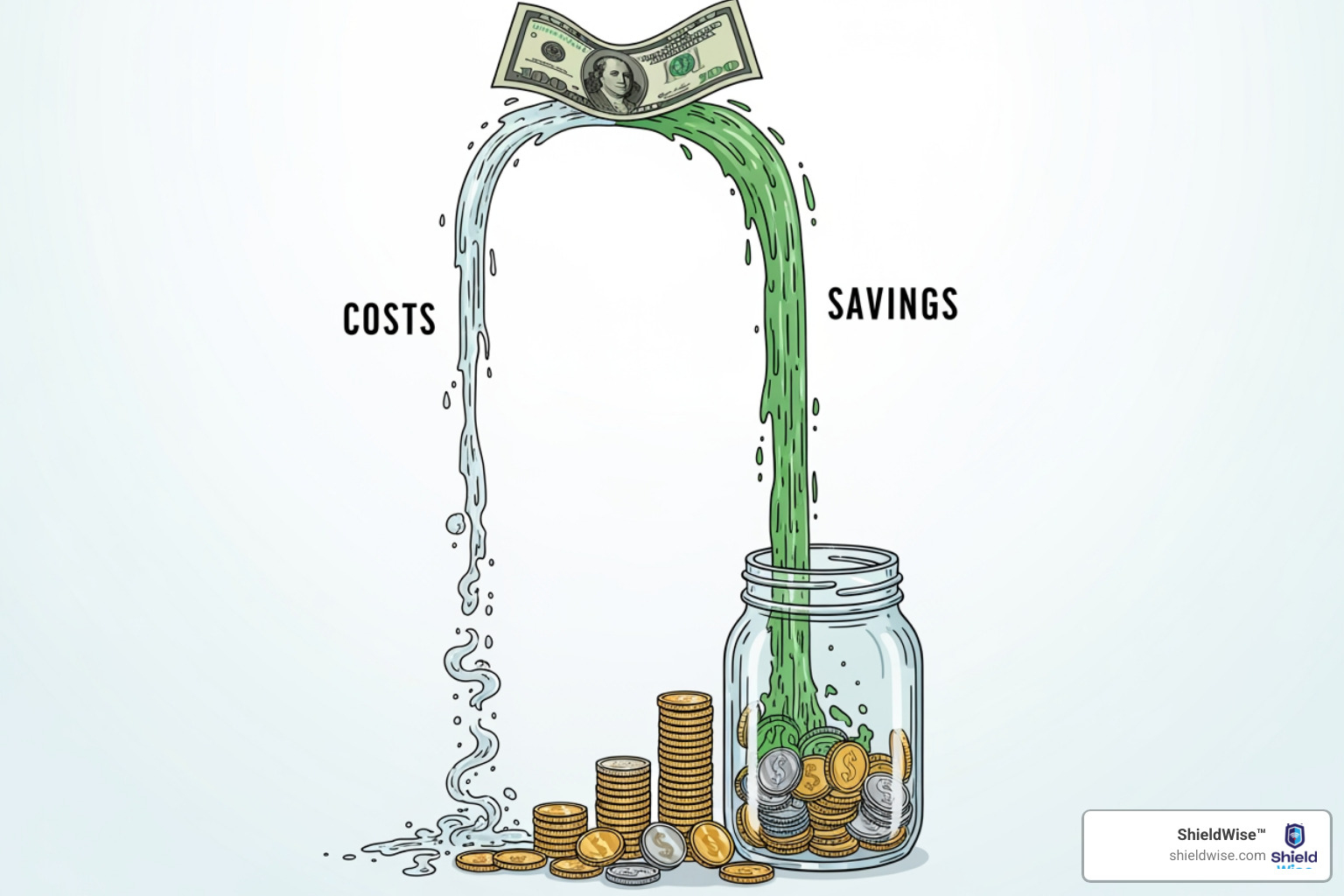
Let’s break down the journey of your premium dollar and how it contributes to your cash value:
- Premium Allocation: You pay your premium. Immediately, a portion is siphoned off to cover the cost of insurance (COI) and various administrative fees. These are the operational costs of maintaining your policy and providing the death benefit. The leftover amount, your “net premium,” is then deposited into your cash value account.
- Index Crediting Strategy: Once in the cash value account, your funds are now ready for growth. The insurance company links this growth to a specific market index, like the S&P 500. They use various “crediting methods” to calculate how much interest your cash value earns based on the index’s performance over a defined “interest crediting period,” which is often one year.
- Index Performance Calculation: At the end of each crediting period, the insurance company looks at how your chosen index performed. Did it go up? Did it go down? They then apply a formula, incorporating your policy’s caps, floors, and participation rates, to determine the interest rate your cash value will receive for that period.
- Applying Interest to Cash Value: The calculated interest is then credited to your cash value account. This interest compounds over time, meaning you earn interest not only on your net premiums but also on the interest you’ve already accumulated. This compounding effect is the real engine behind significant cash value growth.
It’s a dynamic process, and understanding each step helps clarify how cash value works in Indexed Universal Life.
Setting Realistic Expectations for Growth
When we talk about how index universal life builds cash value, it’s important to set realistic expectations, especially regarding the timeline for significant growth. IUL policies are long-term financial tools, not get-rich-quick schemes.
- Years 1-2: Don’t expect much here. Most of your premium during the initial years typically goes towards covering the cost of insurance, fees, and commissions. As a result, little to no cash value accrues during this period. It’s like planting a tree; you don’t see fruit immediately.
- Year 5: By this point, you should start to see some accumulation. The policy costs begin to stabilize relative to your premiums, and the power of compounding interest starts to kick in. You might even have enough cash value to borrow small amounts, though we generally advise caution with early loans.
- Year 10+: This is where growth really begins to accelerate, especially if you’ve been consistent with your premium payments. The cash value account has had more time to compound, and the fees represent a smaller percentage of the overall value.
- Year 20+: For many policyholders, this is when significant cash value may be available, often tens of thousands or even hundreds of thousands of dollars. This long-term accumulation highlights the importance of consistent funding and a patient approach.
The journey of cash value growth is a marathon, not a sprint. Proper funding and management are key to leveraging universal life cash value and flexibility for your financial goals.
The “Levers” of Growth: Understanding Caps, Floors, and Participation Rates
The secret sauce to how index universal life builds cash value lies in three key “levers” that define its growth potential: caps, floors, and participation rates. These mechanisms are what differentiate IUL from other permanent life insurance policies and offer a unique balance of upside potential with downside protection. They essentially act as guardrails, allowing your cash value to grow with the market while shielding it from direct market losses.

The Cap Rate: Your Growth Ceiling
The cap rate is straightforward: it’s the maximum interest rate your cash value can earn in any given crediting period, regardless of how well the linked market index performs. For example, if your IUL policy has a cap rate of 10% and the S&P 500 index rises by 15% in a year, your cash value will only be credited with 10% interest.
While this might sound like a limitation (and it is, in high-performing markets), it’s part of the trade-off for the downside protection an IUL offers. The insurance company uses this cap to manage its risk and ensure it can provide the guarantees, like the floor, that make IUL attractive. Cap rates can vary significantly between policies and insurers, often ranging from 8% to 12%. It’s one of the most important figures to understand when evaluating an IUL policy, as it directly impacts your potential for accumulation. You can learn more about what is a cap rate?
The Floor: Your Safety Net
If the cap is your growth ceiling, the floor is your safety net. The floor rate is the minimum interest rate your cash value will be credited, even if the linked market index performs poorly or declines. Most IUL policies feature a floor of 0%. This means that if the S&P 500 drops by 12% in a year, your cash value won’t lose money due to that market decline (though it will still be subject to policy fees and charges).
This guaranteed floor is a significant protection from market losses, offering peace of mind during volatile periods. It’s one of the core benefits that draw many people to IUL, as it provides a level of security not found in direct market investments. While fees can still reduce your overall cash value, the 0% floor ensures that your indexed interest credit will never be negative.
The Participation Rate: The Percentage of Gain You Keep
The participation rate determines what percentage of the index’s gains your policy actually receives, up to the cap. For instance, if your policy has an 80% participation rate and the index increases by 10% (and this is below your cap), your cash value would be credited with 8% interest (80% of 10%).
The participation rate works in conjunction with the cap. If the index gains 12%, the cap is 10%, and your participation rate is 80%, you’ll still only earn 8% interest. Why? Because you first apply the participation rate to the index gain (80% of 12% = 9.6%), and then check if that result exceeds the cap. In this case, 9.6% is below the 10% cap, so you’d get 9.6%. If the index gained 15% with an 80% participation rate and a 10% cap, 80% of 15% is 12%, but because of the 10% cap, you would still only earn 10%.
Understanding how these three levers—caps, floors, and participation rates—interact is essential for predicting the potential growth of your IUL cash value. They are the unique engine behind how index universal life builds cash value while managing risk.
The Benefits and Risks of IUL Cash Value Accumulation
Like any financial product, Indexed Universal Life insurance comes with its own set of benefits and potential downsides. At ShieldWise™, we believe in providing a balanced perspective so you can make an informed decision.
Primary Benefits of Building Cash Value
The way how index universal life builds cash value offers several compelling advantages for policyholders looking for both protection and financial growth:
- Tax-Deferred Growth: One of the most attractive features is that your cash value grows on a tax-deferred basis. This means you don’t pay taxes on the interest credited to your account each year. This allows your money to compound more efficiently over time, as you’re earning interest on the full amount of your gains, not just the after-tax portion.
- Tax-Free Policy Loans: Once sufficient cash value has accumulated, you can access it through policy loans, often on a tax-free basis. This can be a powerful tool for various financial needs, from funding a child’s education to supplementing retirement income, without impacting Social Security benefits. If structured correctly, these loans can be a source of tax-free income, especially valuable for indexed universal life for retirement planning.
- Flexible Premiums: Unlike whole life insurance with its fixed premiums, IUL policies offer significant flexibility. You can adjust your premium payments within certain limits, paying more when your finances allow to accelerate cash value growth, or paying less (or even skipping payments) if your cash value is sufficient to cover policy charges during leaner times. This adaptability can be a lifesaver during fluctuating economic periods.
- No Impact on Social Security: Loans taken against the cash value of an IUL policy generally do not count towards Social Security earnings thresholds, providing a way to access funds without affecting your retirement benefits.
Potential Downsides and Risks to Consider
Despite the benefits, acknowledge the risks and potential downsides associated with IUL cash value growth:
- Internal Policy Costs: IUL policies come with various fees and charges, including the cost of insurance, administrative fees, and potential surrender charges if you cancel the policy early. These costs can be substantial, especially in the early years, and can significantly erode your cash value growth if the indexed returns are low or if you underfund the policy. These fees are a major reason why meaningful cash value growth takes time.
- Capped Returns: While the cap protects you from excessive market losses, it also limits your upside potential. In strong bull markets, your cash value won’t fully participate in the index’s gains, potentially underperforming direct market investments.
- Unpredictable Growth: Although protected by a floor, the actual growth rate of your cash value is still unpredictable, as it depends on the performance of the linked market index. You won’t know your exact credited interest until the end of each crediting period. This makes long-term projections more illustrative than guaranteed.
- Policy Lapse Risk: This is a significant concern. If your cash value grows too slowly, or if you consistently pay insufficient premiums, the cash value might not be enough to cover the ongoing policy charges. If this happens, your policy could lapse, meaning you lose your coverage and any accumulated cash value. Sadly, almost 88% of universal life policies never pay out, often due to lapsing before the insured’s death. This statistic underscores the importance of proper funding and monitoring. Understanding these risks is part of a comprehensive IUL basics education: complete guide.
- Modified Endowment Contract (MEC) Rules: If you overfund your IUL policy too quickly, it can be reclassified by the IRS as a Modified Endowment Contract (MEC). This can lead to a loss of some of the policy’s favorable tax benefits, particularly regarding withdrawals and loans, which may then be treated as taxable income.
Putting Your Cash Value to Work: How to Access Your Funds
One of the most appealing aspects of how index universal life builds cash value is the flexibility it offers in accessing those funds during your lifetime. Your accumulated cash value isn’t just a number on a statement; it’s a financial resource you can tap into for various needs, providing financial flexibility for everything from retirement planning to unexpected expenses.
Taking a Policy Loan
Accessing your cash value through a policy loan is a popular method. Here’s how it works:
- Tax-Free Access: Loans from your IUL policy are generally tax-free, provided the policy remains in force. This can be a significant advantage, allowing you to access funds without incurring immediate tax liabilities.
- Loan Interest: While the loan itself is tax-free, you will be charged interest on the outstanding loan balance by the insurance company. This interest rate can be fixed or variable, and it’s important to understand these terms.
- Impact on Death Benefit: If you pass away with an outstanding loan balance, the unpaid loan amount, plus any accrued interest, will be deducted from the death benefit paid to your beneficiaries.
- Positive Arbitrage Potential: In some cases, your policy’s cash value might continue to earn interest based on the index performance, even on the portion that has been borrowed against. If the interest credited to your cash value (even the borrowed portion) is higher than the interest rate you’re charged on your loan, this creates “positive arbitrage”—a favorable financial situation where your borrowed money is still working for you.
Making a Withdrawal
You can also access your cash value by making a direct withdrawal.
- Accessing Funds Directly: A withdrawal directly reduces your cash value. It’s like taking money out of a savings account.
- Reducing Cash Value and Death Benefit: Unlike a loan, a withdrawal permanently reduces your policy’s cash value. This, in turn, can reduce the total death benefit available to your beneficiaries.
- Potential Tax Implications: Withdrawals are generally considered a return of your premiums paid (your “cost basis”) first, which is tax-free. However, if your withdrawals exceed the total amount of premiums you’ve paid into the policy, the excess amount (the gain) may be subject to ordinary income taxes. If your policy is a Modified Endowment Contract (MEC), all withdrawals are taxed as income first, and potentially subject to a 10% penalty if you’re under 59 ½.
Surrendering the Policy
If you no longer need the life insurance coverage, or if the policy is no longer serving your financial goals, you have the option to surrender it.
- Terminating Coverage: Surrendering your policy means you are canceling your life insurance coverage entirely.
- Receiving Cash Surrender Value: The insurance company will pay you the cash surrender value, which is your accumulated cash value minus any surrender charges and outstanding loan balances. Surrender charges are fees imposed by the insurer for canceling the policy early, typically decreasing over the first 10-15 years.
- Tax Consequences: Similar to withdrawals, if the cash surrender value you receive is greater than the total premiums you’ve paid, the difference (your gain) will be subject to ordinary income taxes.
Frequently Asked Questions about IUL Cash Value
We hear a lot of questions about IUL, especially concerning its cash value. Let’s tackle some of the most common ones to further clarify how index universal life builds cash value.
What’s the difference between the cash value and the death benefit in an IUL policy?
This is a fundamental distinction. Think of them as two separate, though interconnected, components of your policy:
- Death Benefit: This is the primary purpose of life insurance. It’s the sum of money paid out to your designated beneficiaries upon your death. It provides financial security to your loved ones.
- Cash Value: This is the savings or investment component that accumulates within the policy during your lifetime. It’s money that you, the policyholder, can access or use while you’re still alive.
In most IUL policies, beneficiaries typically receive the death benefit, not both the death benefit and the cash value as an additional amount. If you have an outstanding loan or have made withdrawals, the death benefit will be reduced accordingly.
How does the cash value growth of an IUL compare to whole life insurance?
This is a great question, as both are types of permanent life insurance with cash value, but they grow in very different ways:
- Indexed Universal Life (IUL):
- Growth Mechanism: Cash value growth is variable and linked to the performance of a market index, subject to caps, floors, and participation rates.
- Risk/Reward: Offers higher potential returns than whole life in strong market years (up to the cap) but also has more uncertainty due to market linkage. The floor provides downside protection from market losses.
- Flexibility: Generally offers more flexibility in adjusting premiums and death benefits.
- Whole Life Insurance:
- Growth Mechanism: Cash value grows at a guaranteed, fixed interest rate, often supplemented by potential dividends from the insurance company (if it’s a participating policy).
- Risk/Reward: Offers predictable, guaranteed growth. It’s generally considered lower risk and provides more certainty, but with typically lower growth potential compared to a well-performing IUL.
- Flexibility: Premiums are typically fixed, and the death benefit is less flexible.
IUL offers the potential for higher returns with some market exposure (but with guardrails), while whole life prioritizes certainty and guaranteed, albeit typically lower, growth.
Are there any guarantees associated with the cash value growth in an IUL policy?
Yes, there are specific guarantees, but it’s important to understand what they are and what they are not:
- The Floor (Often 0%): The most significant guarantee related to growth is the floor. As we discussed, this ensures that your cash value will not lose money due to a negative performance of the linked market index. A 0% floor means your indexed interest credit will never be less than zero. This is a powerful form of downside protection.
- Minimum Fixed Interest Rate (Alternative): Some IUL policies may also offer an alternative fixed account option where you can allocate a portion of your cash value to earn a guaranteed minimum fixed interest rate, typically a low percentage (e.g., 1% or 2%). This provides another layer of stability for that allocated portion.
- Growth Itself is Not Guaranteed: While the floor protects against index losses, the actual positive growth rate of your cash value is not guaranteed. It depends on the performance of the chosen market index and the application of your policy’s caps and participation rates. You are not guaranteed to earn a specific positive return; you are only guaranteed not to lose money due to index performance. Policy fees and charges will still be deducted, which can reduce your overall cash value even in years with a 0% index credit.
So, while IUL offers guarantees against market-driven losses, it doesn’t guarantee a specific level of positive growth.
Secure Your Financial Future with the Right Strategy
Understanding how index universal life builds cash value is the first step toward determining if this powerful financial tool aligns with your long-term goals. We’ve explored the core mechanics, from premium allocation and index crediting to the critical roles of caps, floors, and participation rates. We’ve also weighed the significant benefits, such as tax-deferred growth and flexible access to funds, against the potential risks of internal costs, capped returns, and the ever-present risk of policy lapse if not properly managed.
The beauty of an IUL lies in its unique blend of life insurance protection and cash value accumulation potential, shielded by downside protection while participating in market upside (up to a point!). However, its complexity demands careful consideration and proper policy design.
At ShieldWise™, we’re dedicated to cutting through the jargon and providing you with clear, unbiased guidance. We understand that navigating life insurance can be daunting, and we’re here to help you compare options from trusted carriers to find the coverage that’s just right for you and your family in Illinois.
Ready to explore if an IUL policy could be the secret sauce for your financial future?