
What is a Floor Rate and Why Does it Matter?
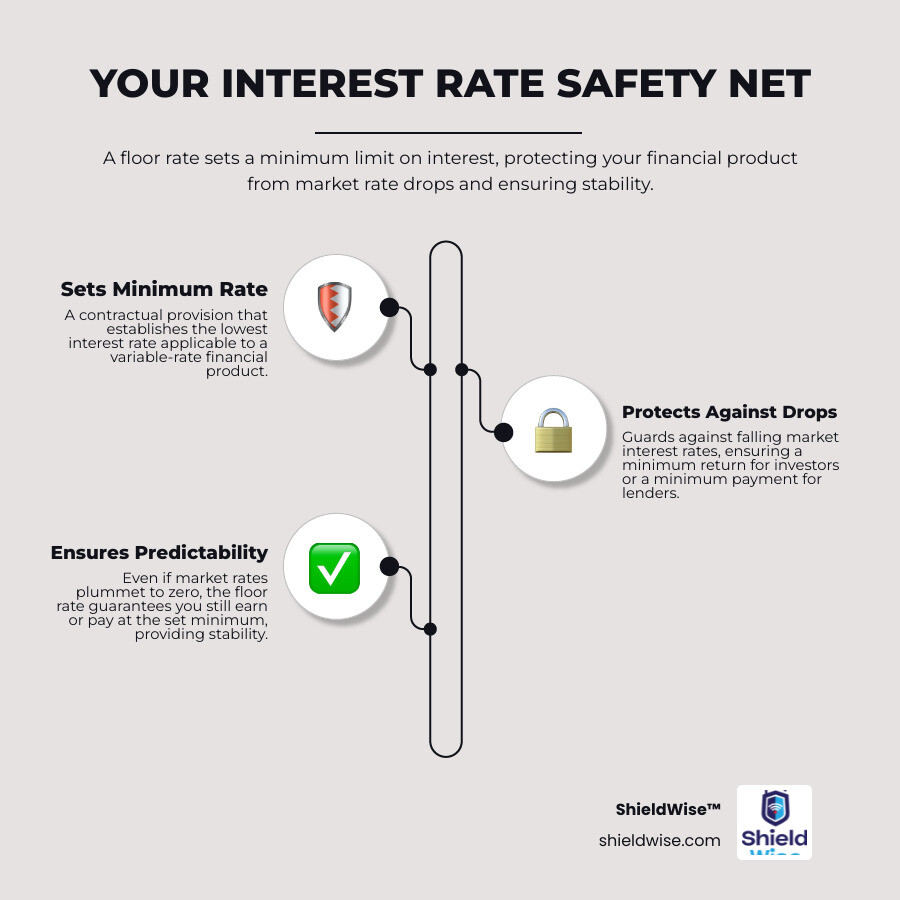
What is a floor rate? It’s a contractual provision that sets a minimum limit on the interest rate applicable to a financial product. Think of it as a safety net. This means that, no matter how low market interest rates go, the rate on your loan or investment will not fall below this set minimum.
Here’s a quick breakdown:
- Definition: The lowest possible interest rate in a variable-rate financial product.
- Purpose: Protects lenders from falling rates and ensures a minimum return. For investors, it guards against losing money in a low-interest environment.
- Impact: Even if the market rate drops to zero, you will still pay or earn at least the floor rate.
Understanding a floor rate is essential for navigating various financial products, from loans and mortgages to more sophisticated investments like Indexed Universal Life (IUL) policies. It’s a key part of managing risk and bringing stability to your financial future.
Interest Rate Floors in the Financial World
Interest rate floors appear in many financial products. What is a floor rate’s purpose? It protects lenders or investors from the risk of falling interest rates. For example, a bank lending at a variable rate faces a risk: if market rates fall too low, the loan becomes unprofitable. A floor rate sets a minimum, ensuring a baseline return and acting as a safety valve in an unpredictable market.
You’ll find floor rates in adjustable-rate mortgages (ARMs), floating-rate loans, and derivative contracts. They hedge against unfavorable market swings, giving lenders predictable income. For borrowers, it means their rate won’t drop below a certain point, but this protection allows lenders to offer better initial rates. A business owner in Illinois with a variable-rate loan will likely have a floor rate in their agreement. This hedging risk strategy is standard for banks to protect their bottom line on everything from small business loans to corporate financing.
How an Interest Rate Floor Works
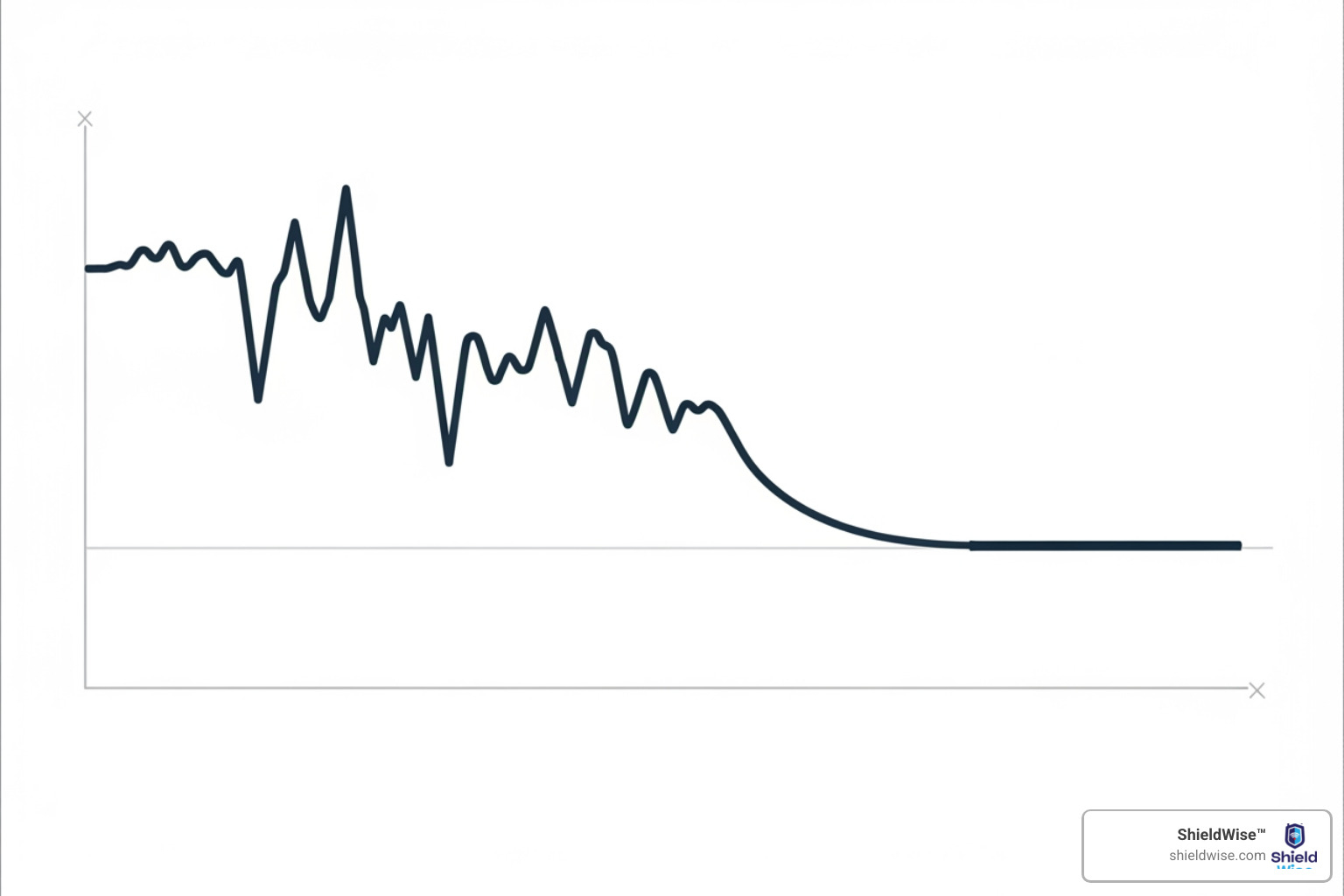
The mechanics are simpler than you might think. A variable-rate product’s interest rate floats with a reference rate, like the Secured Overnight Financing Rate (SOFR). Your actual rate is typically the reference rate plus a margin (e.g., SOFR + 2%).
The floor rate is the strike price—the lowest possible rate. If the calculated rate (reference rate + margin) falls below the strike price, the floor rate applies instead.
For example, consider a floating-rate loan at SOFR + 2% with a 3% floor in the loan agreements. If SOFR is 1.5%, your rate is 3.5% (1.5% + 2%). But if SOFR drops to 0.5%, the calculated rate is 2.5%. Since this is below the 3% floor, your rate becomes 3%.
In derivatives, a floor can be a series of options (‘floorlets’). Buying this derivative is like buying insurance; if rates fall below the strike price, you receive payments to offset lower interest income, managing interest rate risk.
This payout mechanism ensures predictability, allowing the holder to know their minimum return for easier planning. To learn more, see this resource: More on financial derivatives.
Real-World Examples Outside of Insurance
Floor rates are common in everyday financial products.
Adjustable-rate mortgages (ARMs) are a familiar example. The rate adjusts with the market but cannot drop below the floor, protecting the lender. Even if market rates crash, an ARM rate won’t fall below its floor (e.g., 3%). For Illinois homeowners, this is a key detail in loan documents.
Variable-rate business loans work similarly. A line of credit at SOFR + 1.5% might have a 2.5% floor. If SOFR drops to 0%, the bank still earns 2.5%, maintaining profit margins. As a borrower, you must understand the full potential range of your rate.
In corporate finance hedging, large firms use floor derivatives for protection. A bank with many variable-rate loans might buy a floor option. If rates drop below the strike price, the bank receives payments to compensate for lost loan income. It’s a sophisticated risk management tool.
Even credit cards use a similar principle for minimum payments. While calculated as a percentage of your balance, there’s usually a dollar floor (e.g., $25). If 2% of your balance is $10, you still owe the $25 minimum.
These examples show how floor rates create stability. Understanding them helps you make smarter financial decisions, whether borrowing, investing, or managing risk.
What is a Floor Rate in an IUL Policy?
Now, let’s focus on what a floor rate means for your Indexed Universal Life (IUL) insurance policy. In an IUL, your cash value growth is linked to a market index like the S&P 500, but you aren’t directly invested. The policy credits interest based on the index’s performance, and this is where what is a floor rate becomes crucial.
The floor rate in an IUL is a safety net—a guaranteed minimum interest rate for your cash value, typically 0%. This means if the linked market index loses value, your cash value doesn’t. It won’t grow that year, but it won’t shrink. You participate in market gains (up to a cap) but are protected from losses. This downside protection distinguishes IUL from direct stock market investing.
For those who want growth without the risk of market crashes, this feature is a game-changer, balancing growth potential with the stability needed for long-term planning.

The Power of the 0% Floor in IUL
The 0% floor is a big deal because it changes how your money grows. Imagine the 2008 market crash when the S&P 500 dropped over 30%. A standard investment would have lost significant value. With an IUL policy, your cash value would earn 0%. While 0% isn’t exciting, it’s fantastic compared to a major loss.
This is preventing losses through principal protection. Your money doesn’t participate in negative market returns, keeping it safe for market recovery. Because you don’t lose money in down years, you start from a higher point when the market recovers. Unlike other investments that must first regain losses, your IUL cash value is ready to grow immediately.
This compounding without downturns effect is powerful long-term. While a typical retirement account fluctuates, your IUL cash value grows more steadily. You may not capture all market gains due to caps, but you never lose ground during corrections.
At ShieldWise™, we see the peace of mind this brings clients, knowing their cash value is protected from Wall Street chaos.
A Practical Look: What is a floor rate’s impact on cash value?
So, how does the floor rate practically impact your cash value? A floor rate’s guaranteed minimum interest transforms financial planning. Knowing your cash value won’t decrease due to the market allows you to make long-term decisions with confidence.
This predictability is valuable when approaching retirement, as many use IUL cash value for tax-advantaged income. The steady, protected growth means the money will be there when needed. The floor rate also brings policy stability, which risk-averse individuals appreciate as it removes the emotional stress of market swings. Your cash value growth may vary, but it never goes backward due to index performance.
In short, the floor rate provides principal protection, consistent compounding, peace of mind, reliable long-term planning, and reduces your risk. These benefits create a financial product that is both growth-oriented and protective. Understanding what is a floor rate in your IUL is key; it’s the foundation of your financial security.
Floors vs. Caps: Understanding the Full Picture
In IULs, the floor rate and interest rate cap are two sides of the same coin. Together, they set the boundaries for interest earnings, balancing risk and reward. The floor rate is a safety net against falling rates, while the interest rate cap is a ceiling on gains. For example, with a 10% cap, even if the index grows 15%, your interest credit is capped at 10%.
This floor-and-cap combination, or “interest rate collar,” defines your earnings range. It offers market participation with strong downside protection, balancing growth with security.
To help clarify the differences, here’s a quick comparison:
| Feature | Interest Rate Floor | Interest Rate Cap |
|---|---|---|
| Purpose | Protects against falling interest rates | Protects against rising interest rates |
| Who Benefits | Lenders, investors, IUL policyholders | Borrowers, IUL policyholders (in terms of stability) |
| Effect on Returns | Sets a minimum interest rate earned (or paid) | Sets a maximum interest rate earned (or paid) |
| Risk Mitigation | Guards against losses from market downturns | Limits potential for excessive gains (for IUL) |
| In IUL | Prevents negative returns to cash value (typically 0%) | Limits maximum interest crediting in high-growth years |
Understanding both the floor and cap is key to your IUL’s crediting method. The floor provides downside protection, while the cap limits upside gains. This design allows IULs to offer market-linked growth with a built-in safety net.
Advantages of Having a Floor Rate
The advantages of an interest rate floor, especially in an IUL, are compelling for a secure financial future.
- Robust Risk Management: A floor rate (especially a 0% floor) offers superior risk management by insulating your cash value from market losses. You don’t have to worry about your savings shrinking during downturns, a common stressor with direct investments.
- Predictability and Stability: A floor rate brings predictability to financial planning. You always have a guaranteed minimum return, which is valuable for long-term goals like retirement, as it prevents unexpected decreases due to market volatility.
- Peace of Mind: Knowing your money is protected provides calm. A guaranteed minimum return lets you focus on your goals without the stress of market fluctuations.
- Protection Against Losses: A 0% floor is a powerful shield, especially as negative interest rates have appeared globally. It ensures your cash value is never negatively impacted by market performance, preserving your principal to compound from its highest point.
Potential Downsides and Trade-offs
While floors offer great protection in IULs, it’s important to understand the trade-offs to find the right balance for your financial journey.
- Limited Upside Potential (via Caps): The main trade-off for a floor’s protection in an IUL is an interest rate cap. The cap limits how much interest you can earn. For example, with a 10% cap, if the index gains 20%, you are credited 10%. You trade some potential upside for guaranteed loss protection.
- Cost of Protection: In some products, like derivatives, buying a floor has an explicit cost (a premium). In IUL policies, the 0% floor is a fundamental design feature. There’s no separate premium; the cost is built into the overall crediting strategy, which includes caps and participation rates.
- Lower Participation Rates: Some IULs use a participation rate, which determines the percentage of index growth credited to your cash value (e.g., 80%). Policies with strong floor guarantees might have lower participation rates as insurers balance risk and return.
These trade-offs are part of the design that allows IULs to offer both growth and protection. For many, the stability from what is a floor rate outweighs the limited upside.
Frequently Asked Questions about Floor Rates
We understand that diving deep into financial specifics can spark a few questions. Here at ShieldWise™, we believe in crystal-clear explanations. Let’s tackle some of the most common questions about floor rates.
What is a ‘zero-floor’ interest rate and what does it mean for me?
A zero-floor interest rate, common in Indexed Universal Life (IUL) policies, means the minimum interest rate credited is 0%. Your cash value cannot earn less than zero.
As an IUL policyholder, this is a fantastic benefit. If the linked market index has a negative return, your cash value earns 0% for that period. It will not lose money due to market performance, acting as a shield for your savings. This protection is vital, as negative interest rates have occurred globally and markets can be volatile. A 0% floor safeguards your principal and accumulated cash value from market downturns.
This differs from a variable-rate loan with a zero-floor. In a loan, if the base rate drops to zero, you still pay the margin. In an IUL, the zero-floor is purely a benefit to you, protecting your savings from market downturns.
Who benefits most from an interest rate floor?
An interest rate floor benefits different parties:
- Lenders: For products like adjustable-rate mortgages or business loans, floors guarantee lenders a minimum interest income, protecting profit margins and managing risk if market rates fall.
- Investors in Derivative Contracts: Large institutions or corporations buy floor contracts. They receive payments if rates fall below a set level, hedging risk and offsetting reduced income on floating-rate assets.
- IUL Policyholders: As an IUL policyholder with ShieldWise™, you benefit greatly from the floor (typically 0%). It’s a safety net ensuring your cash value never has a negative return due to market performance, securing your principal and gains for consistent growth.
- Risk-Averse Individuals: Anyone seeking stability and downside protection will value products with a floor rate. It provides peace of mind and makes financial planning more secure.
So, the interest rate floor is a powerful ally for financial protection for banks, corporations, and individuals saving for retirement with an IUL.
How is the strike price of an interest rate floor determined?
The “strike price” of an interest rate floor is a carefully calculated rate where the floor’s protection begins.
For loan agreements, the lender sets the floor rate based on several factors:
- Their Cost of Funds: The rate must cover the lender’s borrowing costs, operating expenses, and a profit margin.
- Current Market Conditions: Prevailing rates and the economic environment are key. If rates are expected to fall, a lender may set a higher floor.
- Risk Appetite: The lender’s comfort with risk and their need to protect their net interest margin influence the floor.
- Competitive Landscape: Lenders consider competitors’ offerings to remain competitive while protecting their interests.
For derivative contracts, the strike price is negotiated based on:
- Current Market Rates: The relationship between the strike rate and current market rates.
- Term Length (Maturity): Longer terms mean more uncertainty, influencing the strike price and cost.
- Interest Rate Volatility: High expected volatility increases a floor’s value, impacting its strike price and premium.
- Economic Outlook: Economic forecasts and expected central bank actions are also factored in.
The strike price balances the buyer’s protection against the seller’s obligation, hedging specific interest rate risks. For a deeper dive into the technical details, you can check out this resource: Further reading on caps and floors.
Conclusion: Building a Secure Financial Future
In today’s financial world, finding stability can feel like searching for a treasure map. But there’s a powerful tool designed to give you just that: the floor rate. It’s your foundational layer of protection, shielding you from financial bumps in the road.
Here at ShieldWise™, we believe in giving you clear, straightforward guidance. And when it comes to your Indexed Universal Life (IUL) policy, the floor rate truly shines. It’s more than just a financial term; it’s a solid promise. It means your cash value will never drop because of a bad market day. This offers a unique blend of potential growth and rock-solid security. This amazing downside protection is vital, keeping your long-term financial dreams firmly on track, no matter how the market twists and turns.
We know you want to build a secure financial future and feel good about your choices. An IUL policy with a strong floor rate gives you incredible peace of mind. You’ll know your savings are protected, allowing them to grow steadily and predictably. Think of it as a financial safety net. It catches your wealth when the market dips, making sure it can always continue its upward journey from a stable, protected base.
Are you ready to see how an IUL with a powerful floor rate can fit into your financial plan? We’re here to make it easy! You can compare plans from trusted companies, get instant online quotes, and find the perfect coverage for your family. Don’t let market worries leave your future unprotected. Explore your IUL options and get a free quote with ShieldWise™ today!