
Why Comparing Final Expense Quotes Is Your First Step to Peace of Mind
When you compare final expense quotes, you’re doing more than just shopping for insurance—you’re protecting your family from financial stress at the worst possible time. Here’s what you need to know right now:
Quick Answer: How to Compare Final Expense Quotes
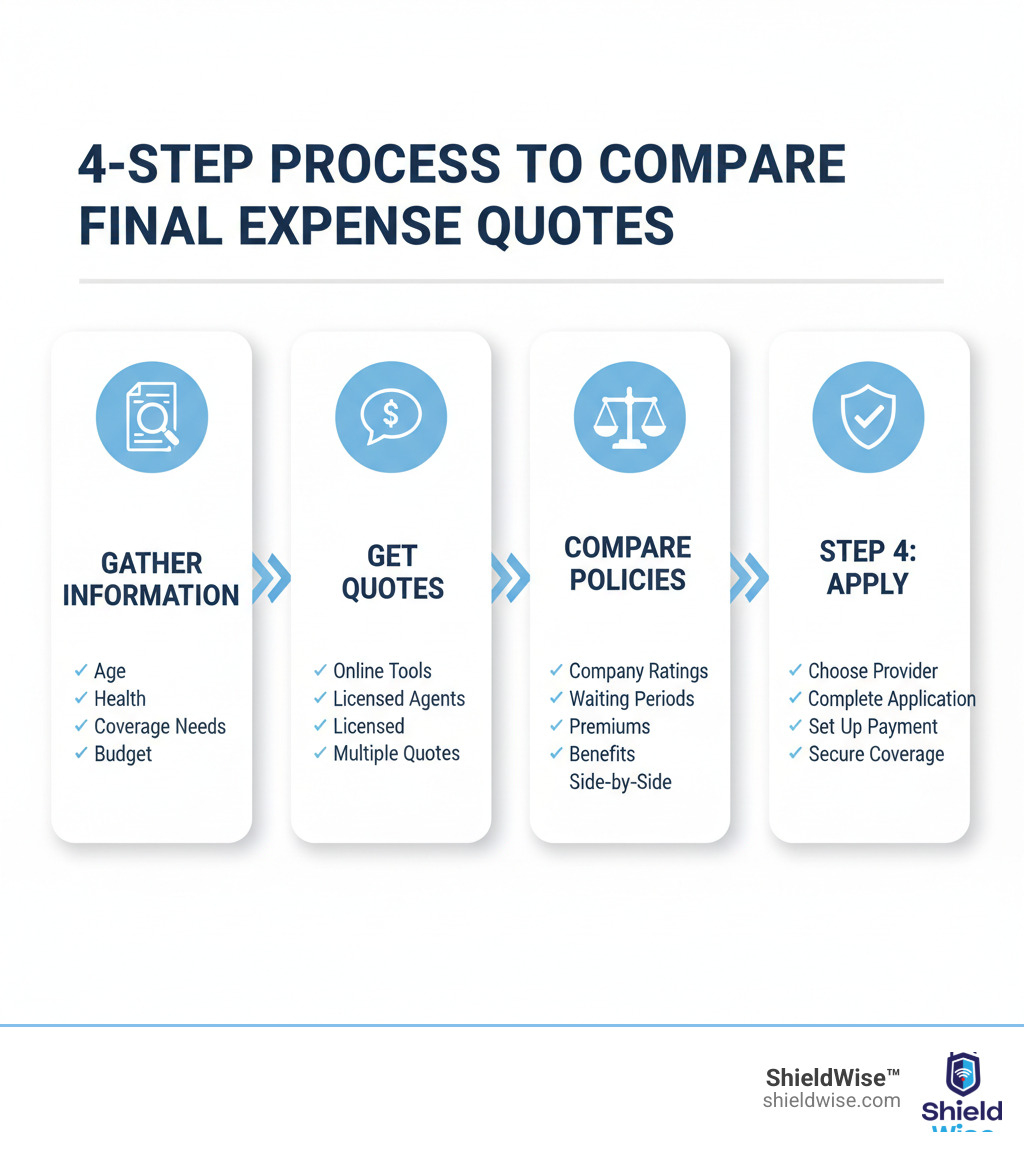
- Gather your information – Have your age, health history, and desired coverage amount ready
- Get multiple quotes – Request quotes from at least 3-5 different carriers through a licensed agent or online marketplace
- Compare apples to apples – Look at the same coverage amount and policy type across all quotes
- Check beyond price – Review the company’s financial strength rating, waiting periods, and policy exclusions
- Understand policy types – Know whether you’re comparing Level Benefit, Graded Benefit, or Guaranteed Issue policies
The average funeral in America now costs between $7,800 and $9,995, according to the National Funeral Directors Association. This substantial bill is why many retirees worry about being a burden on their children.
Final expense insurance is designed to solve this problem. It offers coverage between $5,000 and $25,000, often with no medical exam, and locks in your premium for life. The benefit can pay for funeral costs, medical bills, and other debts, giving your family breathing room.
However, not all policies are the same. Some have waiting periods or cost more for the same coverage. This guide will help you compare quotes smartly to choose a policy that fits your budget and protects your loved ones.
Understanding Final Expense Insurance Before You Compare
Before gathering quotes, it’s crucial to understand what you’re shopping for: final expense insurance.

Final expense insurance (also called burial or funeral insurance) is a type of whole life insurance with a small face value, usually between $5,000 and $50,000. Unlike term life, it’s designed specifically for end-of-life costs and lasts your entire lifetime as long as premiums are paid.
What makes it different is its simplified underwriting. Many policies don’t require a medical exam, making them ideal for seniors or those on a fixed income who might struggle to qualify for standard life insurance.
The benefits are clear: your premiums are fixed, and the death benefit is guaranteed. The main drawback is a higher cost per dollar of coverage compared to term life insurance, and the coverage amount is limited.
If you want to explore more about how this type of coverage works, check out More info about Burial Insurance.
What Does Final Expense Insurance Actually Cover?
When you pass away, your beneficiary receives a tax-free lump sum to use as needed. This beneficiary flexibility is crucial during a stressful time. Common uses include:
- Funeral costs: Funeral home services, casket or urn, and the memorial service.
- Burial or cremation: The plot, grave services, headstone, or crematory fees.
- Leftover bills: Final medical bills, legal fees for settling the estate, and outstanding debts like credit cards or personal loans.
The policy creates a financial cushion so your loved ones can focus on healing.
How Much Do Final Expenses Typically Cost?
Many people are surprised by the cost. According to the National Funeral Directors Association, the median cost of a funeral with burial was $7,848 in 2021, projected to reach nearly $9,995 by 2025 when including a vault. This figure often excludes the burial plot, headstone, or flowers. You can see more detailed statistics at the Media Center: Statistics from the NFDA.
Costs for services, a casket, and a vault can quickly add up. This is why most financial advisors recommend a coverage amount between $10,000 and $25,000. This range typically covers the core funeral costs with enough left over for unexpected bills or debts.
The good news is that when you compare final expense quotes, you’ll find that even modest monthly premiums can secure this protection. And because premiums never increase, you can budget for it confidently.
How to Effectively Compare Final Expense Quotes
Now for the practical part—comparing quotes to find the right coverage. This isn’t just about finding the cheapest premium; it’s about finding the best value that truly protects your family. The process is straightforward when you use a digital marketplace like ShieldWise to get an “apples-to-apples” comparison. For a comprehensive overview, visit our main page on More info about Final Expense Insurance.

Step 1: Gather Your Information and Define Your Needs
Before requesting quotes, have this information ready to make the process faster:
- Personal Details: Your age and gender.
- Health History: Be honest about current conditions, past issues, and medications. This includes things like diabetes, heart disease, or a history of cancer.
- Smoking Status: Note if you’ve used tobacco or nicotine in the last 12 months.
- Coverage Needs: Based on average funeral costs, most people choose between $10,000 and $25,000.
- Your Budget: Determine what you can comfortably afford each month.
Step 2: How to Get and Compare Final Expense Quotes Online
Using an online platform like ShieldWise, you can get instant quotes from multiple top-rated carriers. To evaluate them effectively:
- Enter accurate information. Small mistakes can lead to inaccurate quotes.
- Get multiple quotes. Don’t stop at one or two. Seeing options from many insurers gives you a real market perspective.
- Compare the same policy type. A $10,000 Level Benefit policy should be compared to another $10,000 Level Benefit policy, not a Graded or Guaranteed Issue plan.
- Look beyond the premium. A cheaper policy isn’t a bargain if it has a long waiting period or restrictive exclusions. Price matters, but so does the quality of the coverage.
ShieldWise helps you steer these details, so you can focus on finding the best fit instead of decoding insurance jargon.
Step 3: Compare Providers and Policy Details
Once you have a few promising quotes, dig deeper into the companies behind them:
- Financial Strength: Check ratings from agencies like A.M. Best. Look for companies rated A- or higher, indicating they can pay claims.
- Customer Reviews: Look at platforms like Trustpilot and the Better Business Bureau (BBB) for real customer experiences. An A+ rating from the BBB is a great sign.
- Customer Service and Payout Speed: You want a responsive company that pays claims quickly, often within days. Your family shouldn’t have to wait months for funds.
- Policy Features: Does the policy build cash value? Are there valuable riders, like an accelerated death benefit for terminal illness? Understand any exclusions.
This deeper comparison ensures you’re choosing a partner who will be there for your family. A licensed insurance professional can help you steer these details, which is the support we provide at ShieldWise. For more insights, visit More info about Final Expense Insurance.
Key Factors That Influence Your Final Expense Quote
When you compare final expense quotes, you’ll notice that premiums vary. Insurers aren’t pulling numbers out of thin air; they’re assessing risk in a process called underwriting. For final expense insurance, this is simpler than for traditional policies and often requires no medical exam. Instead, insurers focus on a few key factors. For more comprehensive information on this type of coverage, you can explore More info about Final Expense.
Your Personal Profile: Age, Gender, and Health
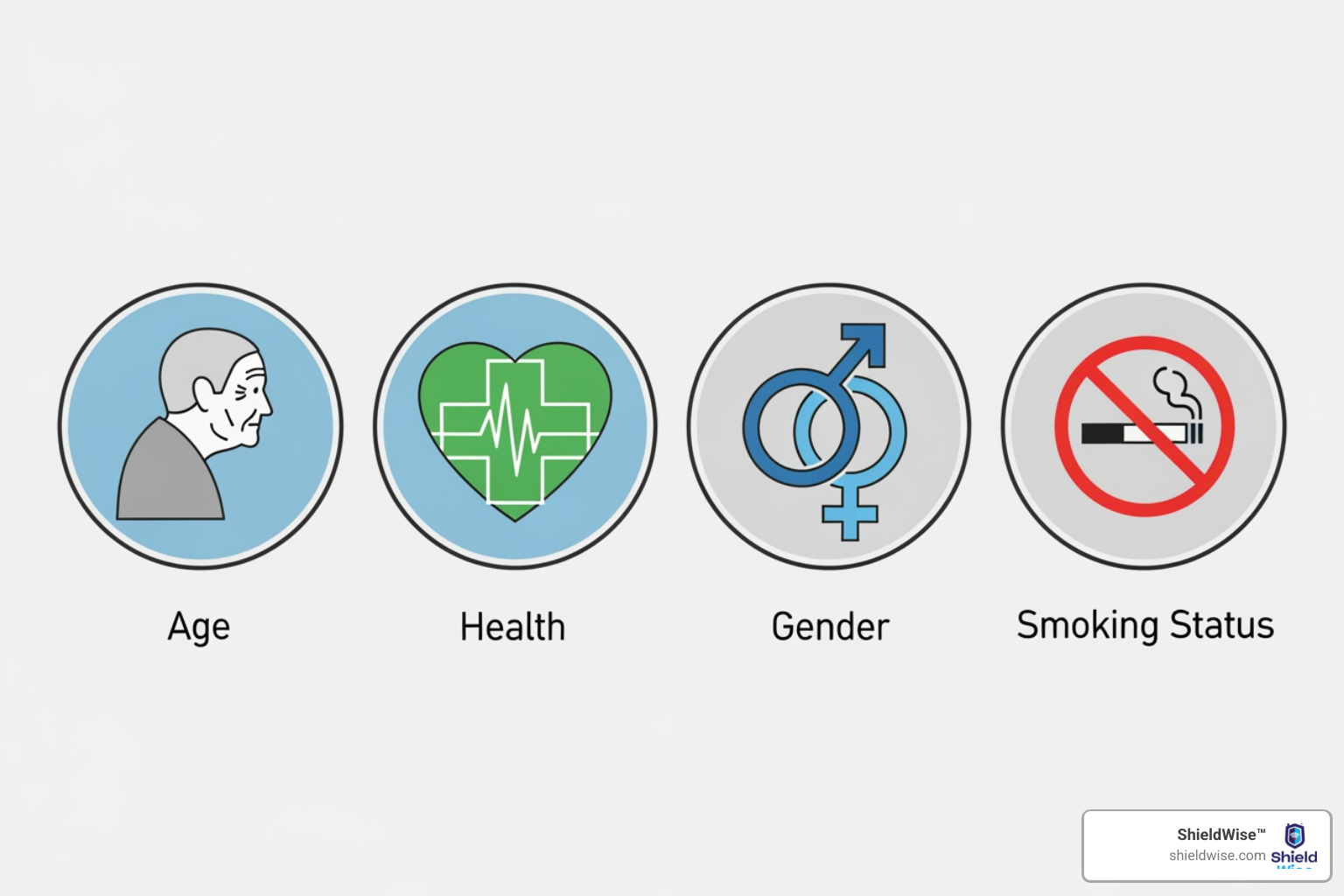
- Age: This is the most significant factor. The older you are when you apply, the higher your premium will be. Securing a policy in your 50s or 60s is more affordable than waiting until your 70s or 80s.
- Gender: Women tend to live longer, so they often pay slightly lower premiums than men of the same age and health.
- Health: Your health status determines your premium and which policy type you qualify for. Good health (even with managed conditions like high blood pressure) can get you the best rates and a Level Benefit policy with day-one coverage. More serious health concerns may lead to a Graded or Guaranteed Issue policy.
- Tobacco Use: If you’ve used tobacco or nicotine in the last 12 months, you’ll be classified as a smoker, which can increase premiums by 25-50%. The good news is you can often reapply for better rates after being tobacco-free for a year.
Your Policy Choices: Coverage Amount and Type
The choices you make about the policy also directly affect your premium.
- Coverage Amount: A $20,000 policy will cost more than a $10,000 policy. The key is to find a balance between adequate protection for your family and a budget you can afford. Most people choose between $10,000 and $25,000.
- Policy Type: As we’ll cover next, there are three main types: Level Benefit, Graded Benefit, and Guaranteed Issue. Each has different underwriting and costs. Guaranteed Issue policies, which accept nearly everyone, are the most expensive.
- Riders: Optional add-ons like an accidental death benefit or accelerated death benefit rider will increase your premium but improve your coverage.
Understanding these factors helps you make informed choices when you compare final expense quotes. At ShieldWise, we show you quotes side by side so you can find the right protection at the right price.
Decoding Your Policy Options: Beyond the Price Tag
When you compare final expense quotes, the premium is just the start. To make an informed decision, you must understand the policy structure, waiting periods, and riders that determine what your loved ones actually receive.
Final expense insurance is a type of whole life insurance, but not all policies work the same. The main difference is how the death benefit is paid out, which depends on your health at the time of application.
The 3 Main Types of Final Expense Policies
Understanding these three types is key to choosing the right policy.
- Level Benefit Final Expense Insurance: This is the gold standard. If you’re in relatively good health, you can qualify with just a few health questions (no exam). It offers the full death benefit from day one with no waiting period and is the most affordable option.
- Graded Benefit Final Expense Insurance: This is for those with some health issues. It has a waiting period, usually two years, for death from natural causes. During this period, beneficiaries receive a return of premiums paid (often with interest) instead of the full benefit. Accidental death is covered in full from day one.
- Guaranteed Issue Final Expense Insurance: This is a safety net for those with serious health conditions who can’t qualify for other insurance. There are no health questions, and approval is virtually guaranteed. It’s the most expensive option and has a two-to-three-year waiting period for natural death, during which beneficiaries get a return of premiums plus interest. Accidental death is covered immediately.
Here’s a quick visual to help you compare:
| Feature | Level Benefit | Graded Benefit | Guaranteed Issue |
|---|---|---|---|
| Underwriting | Simplified (few health questions) | Simplified (few health questions) | None (no health questions) |
| Waiting Period | None—full coverage from day one | 2-3 years for natural death | 2-3 years for natural death |
| Cost | Most affordable | Moderate | Most expensive |
| Ideal Candidate | Relatively good health | Some health issues | Serious health conditions |
If you can qualify for Level Benefit, it’s your best option. If not, Graded and Guaranteed Issue policies still provide valuable peace of mind.
Understanding Waiting Periods, Riders, and Exclusions
A graded death benefit or waiting period means if you pass away from natural causes during the first two or three years, your beneficiaries receive a return of premiums paid (plus interest) rather than the full death benefit. However, accidental death coverage almost always kicks in immediately, providing the full benefit.
All policies have a contestability period (usually two years), where the insurer can investigate your application for inaccuracies. This is why honesty is crucial. Most policies also have a suicide clause, stating that if death by suicide occurs in the first two years, only premiums are returned. After two years, it is covered. If you or someone you know is struggling, please contact the National Suicide Prevention Lifeline at 988.
Policy riders are valuable add-ons. An accelerated death benefit rider lets you access funds if diagnosed with a terminal illness. An accidental death benefit rider pays an extra amount if you die in an accident. When you compare final expense quotes, look at these details, not just the premium. A platform like ShieldWise helps you find the right fit for your needs.