
Understanding Final Expense Insurance: Your Essential Guide
Navigating end-of-life planning can feel daunting, but understanding Final Expense Basics & Education is a smart first step to protect your loved ones. This type of insurance is a small, simple way to cover costs that come after you’re gone.
Here’s a quick look at what final expense insurance is all about:
- What it is: A specific kind of whole life insurance. It’s designed to cover end-of-life costs.
- What it covers: Things like funeral services, burial or cremation, and any small debts or medical bills you might leave behind.
- Who it’s for: Many seniors choose it. It’s also good for those with health concerns who might find other insurance hard to get.
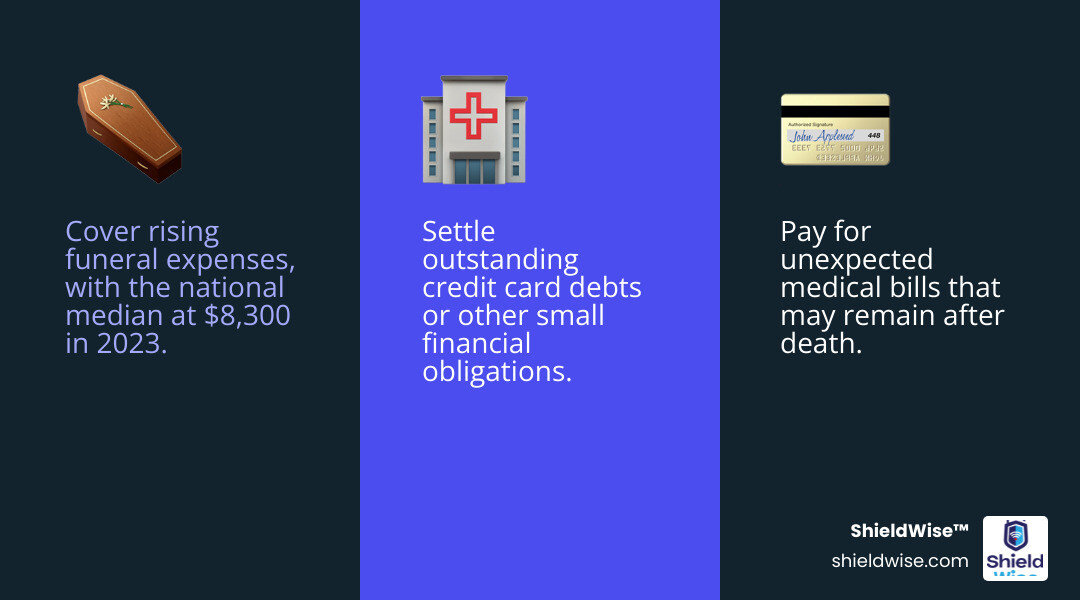
Many people worry about leaving a financial burden for their family. Funerals can cost a lot—the national median was around $8,300 in 2023. These costs keep going up. Final expense insurance helps make sure your family doesn’t have to stress over these bills when they’re already grieving. It’s often simpler and more affordable than other types of life insurance, giving you and your family peace of mind.
What is Final Expense Insurance and What Does It Cover?
Think of final expense insurance as a thoughtful gift that spares your family from scrambling to cover costs during a difficult time. It’s a type of permanent whole life insurance designed to handle expenses after you pass away. It’s also called “burial insurance” or “funeral insurance,” which describes its purpose.
Here’s how it works: when you pass away, the insurance company sends a tax-free cash payout to your beneficiary. It provides immediate funds when your family needs them most, avoiding probate and complex processes.
What can this money cover? Funeral services alone include the basic services fee, embalming, viewing, and the ceremony. The burial plot and casket can also cost thousands. If your family chooses cremation, the policy covers that process, the urn, and any memorial services.
But the coverage doesn’t stop there. The payout can also handle unpaid medical bills, legal fees from settling your estate, or credit card debt you’d rather not pass to loved ones.

Importantly, while designed for end-of-life costs, the death benefit can be used for any purpose. If money is left after the funeral, they can use it for property taxes, their own bills, or as a financial cushion while they grieve. The choice is theirs.
The Rising Cost of Final Expenses
The numbers matter. In 2023, the national median cost of a funeral with viewing and burial was $8,300. And that’s just the median. When you start adding things up, funerals can easily add up to $10,000 or more.
These costs aren’t static. Inflation keeps pushing them higher. Over the past five years, funeral costs have climbed by 6.6%, and cremation costs by 11.3%. This trend shows no signs of slowing.

This is why pre-planning is crucial. Without money set aside, your family might have to drain savings, take out loans, or go into debt to give you a proper goodbye. This financial stress, piled on top of grief, is what Final Expense Basics & Education helps you avoid.
How is it Different from Traditional Life Insurance?
You might wonder if this is just regular life insurance. Not quite. While it’s a type of life insurance, it’s built for a different job.
Traditional life insurance is often about replacing your income for mortgages, college tuition, or maintaining a lifestyle. Coverage amounts are in the hundreds of thousands or millions. Final expense insurance has a simpler purpose: cover immediate end-of-life costs. That’s why coverage amounts are smaller, typically $5,000 to $25,000, though some plans go higher.
The underwriting process is also much easier. Traditional life insurance usually requires a medical exam and extensive health questions. Final expense insurance uses simplified underwriting—no medical exam required. You’ll answer a few health questions, or in some cases (guaranteed issue plans), none at all. This is a game-changer if you’re older or have health issues that make traditional insurance hard to get.
Regarding premiums, the cost per dollar of coverage can be higher than a traditional policy because it’s easier to qualify for. The trade-off is an affordable monthly premium, often $30 to $70, due to the smaller coverage amount. Plus, those premiums are fixed—they never go up.
The target audience is also different. Final expense insurance is designed for adults ages 50 to 85 who want a straightforward way to handle final costs. Perhaps you no longer qualify for traditional insurance or just want a dedicated fund without medical exams.
At ShieldWise™, we see final expense insurance as a simple, accessible tool for providing peace of mind when it matters most.
Your Guide to Final Expense Basics & Education
Now that you understand the basics, let’s explore the practical details of choosing the right coverage. Understanding these Final Expense Basics & Education essentials—policy types, premiums, and coverage amounts—will give you the confidence to make a smart decision for your family.
This is your roadmap. Policies differ, and the best fit depends on your health, budget, and goals.
| Feature | Level Benefit (Simplified Issue) | Graded Benefit | Guaranteed Issue |
|---|---|---|---|
| Approval | Based on health questions; no medical exam | Based on health questions; no medical exam | Guaranteed; no health questions or medical exam |
| Waiting Period | No waiting period; full death benefit from day one | 2-3 year waiting period for non-accidental death | 2-year waiting period for non-accidental death |
| Cost | Most affordable for final expense | Moderate | Highest premiums |
| Ideal Candidate | Good to moderate health; wants immediate full coverage | Moderate health issues (e.g., controlled diabetes) | Severe health issues; turned down for other policies |
Types of Final Expense Policies
There are three main types of final expense policies, each designed for a different health profile. This means there’s likely an option for you, even with health challenges.
Level Benefit policies are the best option if you’re in reasonably good health. You’ll answer a few health questions, but no medical exam is required. The main advantage is immediate coverage: your full death benefit is available from day one, with no waiting period.
Graded Benefit policies are for those with moderate health concerns, like controlled diabetes or a history of heart issues. These policies also use health questions instead of a medical exam. The trade-off is a waiting period, typically two to three years. During this time, if you pass away from natural causes, your beneficiaries receive the premiums you’ve paid plus interest (usually around 10%). Accidental deaths are covered in full from day one.
Guaranteed Issue policies are a safety net for those with serious health conditions or who have been denied other life insurance. Approval is guaranteed with no health questions. However, these policies have higher premiums and a two-year waiting period for non-accidental deaths, similar to graded plans.
Choosing the right type depends on your health and coverage needs. At ShieldWise™, we help you steer these options.
Premiums, Costs, and Coverage Amounts
Final expense insurance is affordable and predictable. Most people pay between $30 and $70 per month, though your exact premium depends on several factors.
Your age is the biggest factor—the younger you are when you buy, the lower your payment. Gender also plays a role, as women often pay less. Your health status determines which policy type you qualify for, directly impacting cost. Finally, the amount of coverage you choose and whether you use tobacco will affect your premium.
The good news is that once you lock in your premium, it never increases. This fixed-rate structure is a huge advantage for seniors on a budget.
Final expense death benefits typically range from $5,000 to $25,000. While some carriers offer up to $50,000, most people find $10,000 to $15,000 is adequate and affordable.
How much do you need? Start by estimating your funeral costs (remember the $8,300 national median, but check local prices). Then, factor in potential medical bills and small debts. Finally, add a 15-20% buffer for inflation and unexpected costs to ensure your coverage remains adequate.
Getting these Final Expense Basics & Education details right ensures you get the coverage you need without overpaying. We can help you calculate your specific coverage amount.
Is Final Expense Insurance Right for You?
So, you’ve learned a lot about Final Expense Basics & Education! Now comes the big question: Is this type of insurance truly the right fit for you and your unique situation? Deciding on any insurance is a personal choice, and it involves looking at the bright spots and considering any limitations. We’ve put together a straightforward look at the pros and cons to help you weigh your options with confidence.
Here’s a quick overview to help you decide if it aligns with your needs:
Pros of Final Expense Insurance:
- Affordable Premiums: One of its biggest draws is the generally low monthly payments, making it accessible for many budgets.
- Simple Application: Forget complicated paperwork and lengthy exams! Most policies just ask a few health questions, and no medical exam is usually required.
- Guaranteed Premiums: Once you lock in your rate, your premiums will never increase, giving you peace of mind and budget stability for life.
- Quick Payouts: When the time comes, funds are often made available to your beneficiaries quickly, sometimes in less than a week, helping them address immediate costs without delay.
- Cash Value Accumulation: As a type of whole life policy, it slowly builds cash value over time. This cash value can be borrowed against if needed.
- Guaranteed Acceptance: For those with more serious health concerns, guaranteed issue policies ensure you can get coverage, no questions asked.
- Peace of Mind: Knowing that your final expenses are covered can lift a huge weight off your shoulders and ensure your loved ones won’t face financial stress during grief.
- Flexible Use: While designed for end-of-life costs, your beneficiaries receive a cash payout and can use the death benefit for any purpose they need.
Cons of Final Expense Insurance:
- Limited Coverage Amounts: It’s designed for final expenses, not for replacing a lifetime of income or paying off a large mortgage. Coverage amounts are typically smaller.
- Waiting Periods: For graded and guaranteed issue policies, there’s usually a 2-year waiting period for non-accidental death. If you pass away during this time, beneficiaries usually get premiums paid back plus interest.
- Higher Cost-Per-Dollar: Compared to a fully underwritten traditional life insurance policy (which requires a medical exam), final expense insurance can sometimes be more expensive for the amount of coverage you receive.
- Not Always Necessary: If you already have substantial savings set aside for end-of-life costs or a large traditional life insurance policy, final expense insurance might be redundant for your needs.
Who is the Ideal Candidate?
Final expense insurance isn’t a one-size-fits-all solution, but for a specific group of people, it can be an absolute game-changer. We’ve seen it provide invaluable support for individuals who truly need it.
This coverage is often an ideal solution for:
- Seniors (ages 50-85): This is the sweet spot for final expense insurance. Many in this age range are thinking about their legacy and want to ensure their family isn’t left with bills. In fact, this market is growing rapidly, seeing an 11% year-over-year increase, especially among this demographic.
- Individuals with Health Issues: If you have pre-existing conditions that make it difficult to qualify for traditional life insurance, final expense policies (especially guaranteed issue) offer a much more accessible path to getting covered.
- Those with Limited Savings: If you haven’t been able to set aside a significant “nest egg” specifically for end-of-life costs, final expense insurance creates that dedicated fund, so your family doesn’t have to scramble.
- People Without Other Life Insurance: It’s a surprising statistic, but approximately 50% of the population is either uninsured or underinsured. If you fall into this group and don’t have any other form of life insurance, a final expense policy ensures you have at least basic protection in place.
If your main goal is to make sure your final wishes are honored and your loved ones are shielded from unexpected financial strain during an already difficult time, final expense insurance is a powerful and compassionate tool.
Applying for Coverage: Final Expense Basics & Education
One of the most appealing aspects of final expense insurance is how straightforward the application process is. It’s intentionally designed to be simple and stress-free, especially when you compare it to the often lengthy process for traditional life insurance. This ease of access is a core part of its appeal.
Here’s what you can generally expect when applying for your Final Expense Basics & Education:
- Simplified Application Process: You won’t find yourself filling out stacks of complicated forms. Most applications are quick and easy, often completed online or with a friendly chat over the phone.
- No Medical Exam Typically Required: This is a huge relief for many! Instead of undergoing a physical exam, most level and graded plans will simply ask you a few “yes” or “no” health questions. These usually cover major health conditions like heart attack, stroke, cancer, or organ transplant within a recent period (often the last 2-5 years).
- Guaranteed Acceptance for GI Plans: If you choose a guaranteed issue (GI) policy, the process is even simpler. There are absolutely no health questions asked, and your acceptance is guaranteed. This makes it a viable option for virtually anyone, no matter their health status.
- Choosing a Beneficiary: A crucial step is deciding who will receive the death benefit. This person or entity is called your beneficiary. We always recommend choosing someone you trust implicitly to manage the funds according to your wishes. It’s also important to pick someone who has an insurable interest in your life. This means they would experience some sort of loss, financial or otherwise, upon your passing, ensuring the payout goes to someone genuinely impacted.
We at ShieldWise™ are here to guide you through every step of this process, making it as smooth and understandable as possible. Our goal is to explain Final Expense Basics & Education so you can secure your family’s future with confidence.
Frequently Asked Questions about Final Expense Insurance
It’s completely natural to have questions when you’re exploring options like final expense insurance. We often hear similar thoughts and queries from individuals, and that’s exactly why we’re here to help clarify these Final Expense Basics & Education for you. Let’s tackle some of the most common questions head-on.
Is final expense insurance worth it?
For many families, absolutely. Think of it this way: if you don’t have savings specifically set aside to cover end-of-life costs, final expense insurance acts as a wonderful safety net. It means your loved ones won’t face the added stress of unexpected bills during an already difficult time of grief. This policy provides a guaranteed, often tax-free, cash payout that can quickly take care of funeral expenses, any lingering medical bills, or small outstanding debts. That peace of mind, knowing you’ve protected your family, is truly invaluable.
However, it’s also fair to say it might not be necessary if you already have a substantial traditional life insurance policy with enough coverage to handle these expenses, or if you have a significant amount of liquid assets (like a large savings account) specifically earmarked for this purpose. We always encourage you to take a moment to assess your current financial picture and any existing coverage. This way, you can clearly see if final expense insurance fills a crucial and important gap for you and your family.
Are there waiting periods for the payout?
This is a really important question, and it’s one we want to make crystal clear! The answer actually depends on the type of final expense policy you choose.
If you opt for a Level Benefit Plan, you’re in luck! These policies typically come with no waiting period. If your application is approved, the full death benefit is available to your beneficiaries from day one, no matter the cause of death.
However, for Graded Benefit and Guaranteed Issue policies, there usually is a waiting period. This is typically for the first two years after your policy is issued. During this waiting period, if you pass away from natural causes, your beneficiaries won’t receive the full death benefit. Instead, they’ll usually get a payout equal to all the premiums you’ve paid, plus a little extra interest (often around 10%). If, however, death occurs due to an accident during this waiting period, the full death benefit is typically paid out. Once that waiting period is over, the full death benefit is paid for any cause of death. It’s truly crucial to understand the waiting period linked to any policy you’re considering, and we’ll make sure you have all the details.
How much coverage do I actually need?
Figuring out the right amount of coverage is a very personal journey, and we’re here to help you steer it. We suggest a few simple steps to help you land on a figure that feels just right:
First, let’s estimate funeral costs. A great place to start is by researching the typical funeral, burial, or cremation costs right in your area. The Federal Trade Commission’s Funeral Rule is a fantastic guide, as it ensures you have access to itemized lists of expenses from funeral homes. This will give you a clear picture of what potential costs might look like.
Next, factor in any potential medical bills and debts. Think about any medical expenses that might not be fully covered by health insurance, or any outstanding credit card balances, personal loans, or other smaller debts you’d rather not leave behind for your family.
Then, it’s smart to add a buffer for inflation. Funeral costs tend to climb over time, so adding a little extra to your coverage can help ensure the benefit remains adequate years down the road. You might also want to consider your family’s immediate needs – perhaps leaving a small amount for their living expenses during that initial adjustment period.
While coverage amounts can vary, it’s good to know that final expense policies often range between $5,000 and $25,000, which is usually enough to cover most funeral-related expenses. To get a truly personalized recommendation custom specifically to your unique needs and situation, we warmly invite you to Take our Needs Assessment today. This helpful tool is designed to guide us in finding the very best life insurance options for you and your cherished loved ones.
Conclusion: Protect Your Loved Ones with Confidence
You’ve made it through the essentials, and now you have a solid grasp of Final Expense Basics & Education. Armed with this knowledge, you’re in a much better position to make decisions that truly protect the people you care about most.
Here’s what we’ve covered together: Final expense insurance offers genuine financial protection when your family needs it most. It brings peace of mind, knowing your loved ones won’t scramble to cover funeral costs, medical bills, or outstanding debts while they’re grieving. And perhaps best of all, it’s designed with ease of qualification in mind—no medical exams for most policies, straightforward applications, and options even for those with serious health concerns.
This isn’t just another insurance policy gathering dust in a file cabinet. It’s a thoughtful way to ensure your final wishes are honored without creating a financial burden for the people you love. Whether it’s covering the cost of a dignified funeral, settling those last medical bills, or simply giving your family breathing room during a difficult transition, final expense insurance serves a very real, very human purpose.
At ShieldWise™, we believe insurance doesn’t have to be complicated or confusing. We’re here to help you compare plans from trusted carriers and find the coverage that fits your needs and budget. Our platform gives you instant online quotes and clear, jargon-free guidance—because you deserve to make this decision with confidence, not confusion.
Your family has been there for you. Now it’s time to be there for them, even after you’re gone. Get a quote and secure your family’s future today. It takes just a few minutes, and the peace of mind? That lasts a lifetime.