
Why Final Expense Insurance Matters for Seniors on a Fixed Income
Living on a fixed income as a senior presents real challenges. After a lifetime of hard work, the last thing you want is to burden your family with thousands of dollars in funeral bills.
Quick Answer: What You Need to Know
Final expense insurance helps seniors on a fixed income cover end-of-life costs without draining savings or leaving debt behind. Here’s what makes it different:
- Small coverage amounts ($5,000–$25,000) designed specifically for funeral and burial costs
- Fixed monthly premiums that fit a tight budget (often $30–$70/month)
- No medical exam required for most policies—just a few health questions
- Guaranteed acceptance options available even with health conditions
- Permanent coverage that lasts your entire life as long as premiums are paid
The average funeral now costs between $7,000 and $10,000. For those stretching every dollar, this is a huge expense. Without a plan, your family might have to use savings, credit cards, or even take out loans to cover the costs.
The good news is that final expense insurance is designed for this situation. It isn’t traditional life insurance with high costs and complex medical exams. It’s a simple, affordable way to ensure your family isn’t stuck with bills during a difficult time.
You’re not trying to leave a fortune, just peace of mind. This insurance ensures your funeral is paid for, so your family can focus on healing, not finances. It provides this security without breaking your monthly budget.
What is Final Expense Insurance and How Does It Work?
Final expense insurance, also known as burial or funeral insurance, is a type of whole life insurance designed to cover end-of-life costs. It provides permanent coverage that lasts your entire life, as long as premiums are paid.
Unlike traditional policies, final expense insurance offers a smaller death benefit, making it more affordable. The simplified underwriting process often requires no medical exam—just a few health questions. This approach, along with fixed premiums and cash value accumulation, makes it an attractive option for many seniors.

For a deeper dive into the specifics, you can explore our guide on What is Burial Insurance?. To understand more about the nature of whole life insurance, we recommend reading More about Whole Life Insurance.
How It Differs from Traditional Life Insurance
The main difference between final expense insurance and traditional life insurance lies in their purpose, coverage amounts, and the application process.
- Coverage Amounts: Traditional life insurance is for income replacement or large debts, with coverage of $100,000+. Final expense insurance focuses on end-of-life costs, with coverage from $2,000 to $50,000, making it focused and budget-friendly.
- Underwriting Process: Traditional policies require a full medical exam and lengthy underwriting. Final expense policies offer quick approval, often with just a few health questions (simplified issue) or none at all (guaranteed issue), making them accessible to those with pre-existing conditions.
- Policy Purpose: The goal of final expense insurance is to cover funeral costs and relieve family burden. Traditional life insurance provides broader financial security, like income replacement.
- Premium Costs: With smaller coverage and simplified underwriting, final expense premiums are affordable and fixed, making them easier for seniors on fixed income to budget. Traditional policies have much higher premiums.
- Target Audience: Final expense insurance is designed for older adults, typically ages 50 to 85, seeking a simple way to cover final costs without a medical exam. Traditional life insurance is for a broader audience.
The Role of the Death Benefit
Upon the policyholder’s death, the insurer pays a tax-free, lump-sum cash benefit to the named beneficiary. This payout is incredibly flexible.
Unlike restrictive pre-paid funeral plans, the beneficiary of a final expense policy has complete control over how the money is spent. There are no restrictions. This means they can use the funds not only for funeral costs but also for a variety of other pressing expenses.
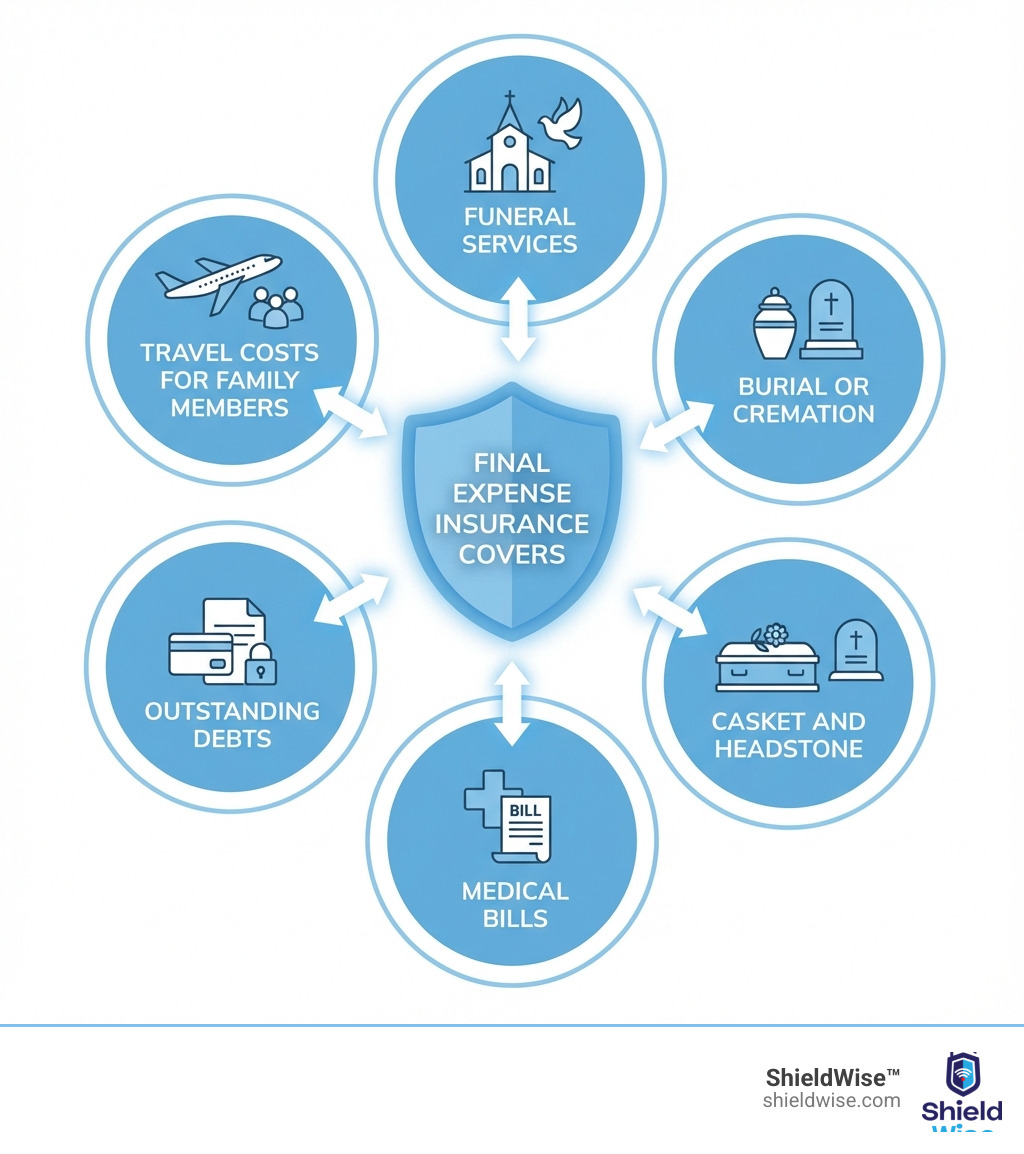
This flexibility allows your loved ones to cover:
- Funeral Costs: This is the most common use, covering everything from embalming and viewing to the burial plot, headstone, and reception.
- Paying Medical Bills: Unpaid medical bills, hospice care, or other end-of-life treatment costs can quickly accumulate and often fall to the family to manage.
- Settling Debts: The death benefit can be used to pay off outstanding debts like credit card balances, small loans, or even lingering utility bills.
- Legal and Probate Fees: Managing an estate can involve legal and accounting costs, which the death benefit can help offset.
- Travel for Family: Sometimes, family members need to travel a significant distance to attend services, and the funds can help cover these unexpected travel expenses.
- Leaving a Small Legacy: For some, the policy is also a way to leave a small financial gift to loved ones or a chosen charity.
The goal is to allow your family to grieve without financial stress, giving them the flexibility to handle any needs that arise.
The Rising Cost of Saying Goodbye: Why Final Expense Insurance is Crucial for Seniors on a Fixed Income
Let’s face it, saying goodbye to a loved one is never easy, and it often comes with a hefty price tag. For seniors on fixed income, understanding these costs is the first step toward smart planning.

The average funeral is a significant financial burden. The National Funeral Directors Association (NFDA) reports an average cost of $7,848 for a funeral with viewing and burial, though costs can easily exceed $10,000. You can find more detailed figures on NFDA funeral cost data.
These figures often don’t even include all the potential expenses. Here’s a breakdown of what typically contributes to these costs:
- Cremation Costs: While sometimes less expensive than a traditional burial, cremation services can still range from $5,000 to $10,000.
- Burial Plots: The cost of a burial plot can vary widely depending on location.
- Headstones: A memorial marker can add hundreds or even thousands of dollars.
- Caskets: These can be one of the largest expenses, typically costing between $2,000 and $10,000. Embalming alone can average around $845.
- Medical Bills: End-of-life medical expenses, even with Medicare, can leave behind significant out-of-pocket costs.
- Other Debts: Credit card balances, small personal loans, or even lingering utility bills can surprise surviving family members.
Without a plan, these costs can deplete retirement savings or force your family into debt. Final expense insurance is designed to protect your savings and prevent this financial strain on your loved ones. For a comprehensive look at all the potential costs, review our page on End of Life Expenses.
Budgeting for Peace of Mind
For seniors on fixed income, every dollar counts. No one wants to leave a financial burden on a grieving family. The emotional stress of losing a loved one is profound enough without adding the pressure of unexpected bills.
Final expense insurance is an invaluable tool, offering an affordable solution for a fixed-income budget. With predictable monthly payments, you can plan for this expense without worry. It’s a simple act of love that provides peace of mind, ensuring your family can focus on their memories, not on money.
Understanding Final Expense Coverage and Costs
Final expense insurance is a practical solution for end-of-life costs. Coverage typically ranges from $2,000 to $40,000 (some up to $50,000), providing an affordable way to cover essential expenses without over-insuring.
Because death benefits are smaller, these policies are affordable. Many cost as little as $15 a month, with typical premiums from $30 to $70. For those looking for competitive rates, our Low Cost Final Expense page is a great resource.
To give you a better idea, here’s a general comparison of sample monthly premiums for a $10,000 final expense policy for non-smokers. Please remember that these are estimates, and actual rates will vary based on individual health, specific policy, and insurer.
| Age | Gender | Estimated Monthly Premium for $10,000 Coverage (Non-Smoker) |
|---|---|---|
| 65 | Female | $45 – $65 |
| Male | $60 – $85 | |
| 75 | Female | $80 – $110 |
| Male | $110 – $140 | |
| 85 | Female | $136 – $211 |
| Male | $183 – $286 |
Factors That Influence Your Premium
Several factors come into play when calculating the cost of your final expense insurance premiums:
- Age: The younger you are when you purchase the policy, the lower your premiums will be. Premiums increase with age.
- Gender: Women typically have a longer life expectancy, which often translates to slightly lower premiums.
- Health Status: Your health affects your premium. Healthier individuals applying for “simplified issue” policies (with health questions) usually get better rates than those needing “guaranteed issue” policies (no health questions).
- Tobacco Use: Tobacco users can expect to pay a higher premium, sometimes with a surcharge of about 30%.
- Coverage Amount: The higher the death benefit you choose, the higher your monthly premium will be.
- Policy Type: Simplified issue policies generally have more competitive rates than guaranteed issue policies because they involve a minimal health assessment.
Can Beneficiaries Use the Payout for Anything?
Yes. A key benefit is the flexibility of the cash payout. Once paid to your beneficiary, there are no restrictions on how the money can be used. This means the funds can be applied to any expense they deem necessary.
While often intended for funeral costs, beneficiaries can also use the funds for:
- Medical Bills: Settling any outstanding medical bills or end-of-life care expenses that might arise.
- Credit Card Debt: Paying off credit card balances or other small personal loans you may have left behind.
- Utility Bills: Covering lingering household bills during the transition period.
- Travel for Family: Assisting family members with travel expenses if they need to come from out of town for services.
- Legal Fees: Helping with any legal fees associated with settling your estate.
- Personal Needs: Simply providing a financial cushion for your loved ones during a difficult and emotional time, allowing them to focus on grieving rather than financial stress.
This flexibility ensures the funds alleviate whatever financial pressure your family faces.
How to Qualify: Pros, Cons, and the Application Process
For seniors on fixed income, navigating insurance applications can seem daunting, but final expense insurance is designed to be simple and accessible.
The streamlined application process often leads to quick approval. The goal is to provide coverage with minimal hassle.
Key Benefits for Seniors on a Fixed Income
Final expense insurance offers several compelling advantages, especially for those managing their finances on a fixed budget:
- Fixed Premiums: Your premiums are locked in and will never increase. This predictability is invaluable for budgeting on a fixed income.
- Easy Budgeting: Affordable, unchanging premiums fit easily into a monthly financial plan without fear of unexpected hikes.
- No Medical Exam Options: Most final expense policies bypass the medical exam, a significant hurdle for many seniors. They require only a few health questions or none at all.
- Guaranteed Acceptance: For those with significant health challenges, guaranteed issue policies ensure acceptance, regardless of medical history.
- Permanent Coverage: As a type of whole life insurance, these policies offer lifelong protection as long as you pay your premiums.
- Builds Cash Value: These policies accumulate a modest cash value over time, which can sometimes be borrowed against.
- Peace of Mind: The greatest benefit is knowing your final expenses won’t burden your loved ones. You can learn more about securing this peace of mind on our End of Life Insurance for Seniors page.
Potential Drawbacks and Limitations
While final expense insurance is a fantastic solution for many, it’s important to be aware of its potential drawbacks:
- Smaller Death Benefit: Coverage amounts are lower than traditional life insurance and may not be sufficient for income replacement or paying off a large mortgage.
- Higher Cost-Per-Dollar: Due to simplified underwriting, the cost per dollar of coverage can be higher than a traditional policy for a very healthy individual.
- Graded Death Benefits and Waiting Periods: Guaranteed issue policies often have a waiting period (usually two years) for death by natural causes. During this time, beneficiaries typically receive a refund of premiums plus interest. Accidental death is usually covered immediately.
- Age Restrictions: Most policies are for individuals between 50 and 85, though some providers extend to age 90.
The Simple Application Process for Final Expense – Seniors on a Fixed Income
The application is designed for speed and ease, making it accessible for seniors on fixed income.
There are two main policy types based on the application:
- Simplified Issue Policies: These policies require a short health questionnaire instead of a medical exam. Insurers use your answers and database checks to assess risk. If your health conditions aren’t severe, you can often qualify for these more affordable plans, which may offer immediate full coverage.
- Guaranteed Issue Policies: These policies ask no health questions and guarantee acceptance, making them an excellent option for those with serious health issues. However, they almost always have a graded death benefit or waiting period (typically two years) for natural death and have higher premiums.
Most insurers offer policies for ages 50-85. It gets more expensive with age, but coverage is still available, even for those over 85. Our guide on Life Insurance Over 85 No Medical Exam provides more details. The application can often be completed over the phone or online in minutes, with approval sometimes granted before the call even ends.
Frequently Asked Questions about Final Expense Insurance
Here are answers to common questions about final expense insurance, especially from seniors on fixed income.
How do I know if final expense insurance is the right choice for my situation?
Consider the following to see if final expense insurance is right for you:
- Assess Your Savings: If you lack sufficient savings ($8,000 – $10,000+) set aside for final costs, or prefer to keep your savings for other uses, this insurance is an excellent solution.
- Consider Your Health Status: If health conditions prevent you from qualifying for traditional life insurance, these policies offer a viable path to coverage without a medical exam.
- Desire to Protect Your Family: If your primary goal is to spare your loved ones from financial stress during a difficult time, final expense insurance is a great choice.
- Lack of Other Life Insurance: If you don’t have life insurance, or your term policy is set to expire, a final expense policy provides lifelong coverage.
- Fixed Income Budget: The predictable, affordable monthly premiums are ideal for budgeting this expense on a fixed income.
If you need an affordable, accessible policy to cover final costs and protect your family on a fixed income, final expense insurance is likely a smart choice.
What happens if I can no longer afford the premiums?
Paying premiums is essential, but these whole life policies offer flexibility if you face financial hardship:
- Policy Lapse and Cash Value: If you stop paying, the policy will lapse. Depending on how long you’ve had it, you might be entitled to receive its accumulated cash value.
- Policy Loans: You may be able to take a loan against the policy’s cash value, but any outstanding balance will reduce the death benefit.
- Paid-Up Policy with Reduced Benefit: You might have the option to convert to a “paid-up” policy, where you stop paying premiums but keep a reduced death benefit.
- Contact Your Provider: It’s always best to contact your insurance provider if you anticipate payment difficulty. They can discuss your specific policy’s options.
Is there a waiting period before the policy pays the full benefit?
This is a key question, and the answer depends on your policy type:
- Graded Death Benefit (Waiting Period): Many guaranteed issue policies have a waiting period, often two years. If the insured passes away from natural causes during this time, beneficiaries typically receive a refund of premiums paid, often with interest, instead of the full death benefit.
- Accidental Death Coverage: It’s crucial to note that even policies with a waiting period usually pay the full death benefit immediately if the death is accidental.
- Immediate Benefit Policies: Simplified issue policies, which require health questions, often offer immediate full coverage from day one. They are generally less expensive than guaranteed issue policies.
When you apply, we will ensure you understand if a waiting period applies to your policy and its terms.
Conclusion: Securing Your Legacy and Protecting Your Family
For final expense – seniors on fixed income, securing a policy isn’t just about covering costs; it’s about a profound act of love and responsibility. It’s about ensuring that your legacy isn’t overshadowed by financial strain, and that your family can find comfort in their memories rather than stress over unexpected bills.
We’ve explored how final expense insurance stands apart as an accessible, affordable, and flexible solution. With fixed premiums, lenient underwriting, and a death benefit that can be used for anything, it offers invaluable peace of mind. You gain the assurance that your funeral and other end-of-life expenses are handled, protecting your hard-earned savings and safeguarding your loved ones from debt.
Taking control of these end-of-life costs is a smart, proactive step. We at ShieldWise™ understand the unique needs of seniors on fixed income, and we’re here to help you compare options from trusted carriers. Our goal is to provide you with clear, jargon-free guidance so you can protect your family and secure the right coverage with confidence.
Ready to take the next step towards securing your peace of mind? Get your free Final Expense Insurance quote today and see how affordable and simple it can be.