
Why Comparing Medicare Supplement Plans Matters
Medicare Supplement Insurance, or Medigap, helps pay certain out-of-pocket costs left by Original Medicare. Compare the benefits you need, the premium you can sustain and your right to buy a policy. No Medigap plan pays every possible health expense.
Reviewed October 13, 2026. Use current Medicare and insurer documents for the benefit year you are choosing. Premiums vary by insurer, policy version and your circumstances; get an individual quote.
- Choose a plan letter based on its covered cost sharing.
- Compare equivalent policies, including whether they are standard, high-deductible or Medicare SELECT.
- Include premiums, remaining deductibles and costs outside the policy.
- Confirm eligibility and enrollment protections before changing coverage.
Understanding the Medigap Plan Letters
Most states use lettered plans A, B, C, D, F, G, K, L, M and N. The standard benefits for the same letter match across insurers. Massachusetts, Minnesota and Wisconsin use different standardization. Some insurers offer high-deductible or SELECT versions with important differences.
Start with Medicare’s full benefit chart. This short comparison highlights differences; it is not the complete policy.
| Plan | A difference to check |
|---|---|
| A | Basic cost-sharing benefits; no Part A deductible benefit. |
| B | Adds the Part A deductible benefit. |
| C | Includes the Part B deductible for eligible buyers. |
| D | No Part B deductible or excess-charge benefit. |
| F | Includes the Part B deductible and excess charges for eligible buyers. |
| G | Similar listed benefits to F, excluding the Part B deductible. |
| K and L | Share certain costs, with annual limits. |
| M | Covers half the Part A deductible. |
| N | Some visit copays; no Part B excess-charge benefit. |
Who Can Buy Plans C and F?
People first eligible for Medicare on or after January 1, 2020 cannot buy C or F. Earlier eligibility may allow a purchase, subject to availability and buying rights. Existing eligible owners can generally keep their policies. These plans have not disappeared for everyone.
Comparing Plans G, F and N
Compare these options by benefits and quotes for your situation. Popularity does not tell you which policy fits your needs, and this guide does not assert an unverified market-share ranking.
Plan G: Broad Listed Cost-Sharing Benefits
Standard G leaves the Part B deductible to you and includes the chart’s Part B excess-charge benefit. High-deductible G has a separate annual threshold before benefits begin. Ask which version is quoted; a lower premium can mean more initial expense.
Foreign-travel emergency benefits have limits, a separate deductible and covered-event conditions. They are not full international health insurance. Review the policy and Medicare’s Medigap guide.
Plan F: Check Eligibility and Policy Type
For eligible buyers, standard F covers the listed Part B deductible benefit. A high-deductible version is different. Neither version covers every service excluded by Medicare, and there is no universal monthly price difference between F and G.
Plan N: Compare Copays and Excess Charges
N may have a lower premium than a quoted G, but check both. It can require up to $20 for some office visits and up to $50 for emergency-room visits without inpatient admission. It does not pay Part B excess charges. Ask providers whether they accept Medicare assignment.

How to Compare and Enroll
Gather your Medicare dates, existing benefits, preferred providers and budget. Check Medicare Basics: Turning 65, then get written policy details and comparable quotes. Confirm acceptance and effective dates before cancelling existing coverage.
Eligibility and Medigap Open Enrollment
Medigap generally requires both Part A and Part B. The federal six-month Open Enrollment Period starts the first month you are at least 65 and have Part B. During it, health conditions cannot be used to refuse an offered policy or raise its price. It is separate from annual Medicare plan Open Enrollment.
A pre-existing-condition waiting period can still apply in some circumstances; prior creditable health coverage may reduce or eliminate it. Under-65 rights vary by state. Check Medicare’s buying rules and your state’s protections rather than assuming immediate coverage for every condition.
Compare Current and Future Costs
Ask how premiums are priced. Attained-age pricing can rise with age; issue-age pricing is based on purchase age; community pricing is not based on age. None guarantees that premiums will stay fixed. Inflation, claims experience and other permitted factors can cause increases.
Check discounts, underwriting where allowed, service, and the exact policy variant. You still pay the applicable Medicare premiums alongside Medigap. See Medicare’s cost comparison guidance. For K and L, confirm the current annual limit and remaining Part B deductible; the limit does not include every expense.
Switching and Guaranteed-Issue Rights
Outside initial Medigap Open Enrollment, underwriting may apply unless a federal or state protection applies. Guaranteed-issue rights depend on the exact event, eligible policy letters and deadlines. Moving out of an Advantage or SELECT service area is not a blanket right whenever an ordinary Medigap owner moves.
Trial rights for returning from Medicare Advantage have specific conditions. Do not assume every Advantage member can buy any Medigap policy without underwriting during annual plan Open Enrollment. Keep coverage notices and confirm your rights before switching.
Illinois also has a limited birthday-based protection for existing Medigap owners aged 65–75: a 45-day period beginning on their birthday to choose equal or lesser benefits from the same issuer or an authorized affiliate. It does not open every carrier or provide a general Advantage-to-Medigap switching right. Check 215 ILCS 5/363(8) and current application requirements.
Medigap and Medicare Advantage Serve Different Roles
Medigap supplements Original Medicare. Medicare Advantage is an alternative way to receive Medicare benefits. Medigap does not pay an Advantage plan’s copayments or premiums.

Original Medicare With Medigap
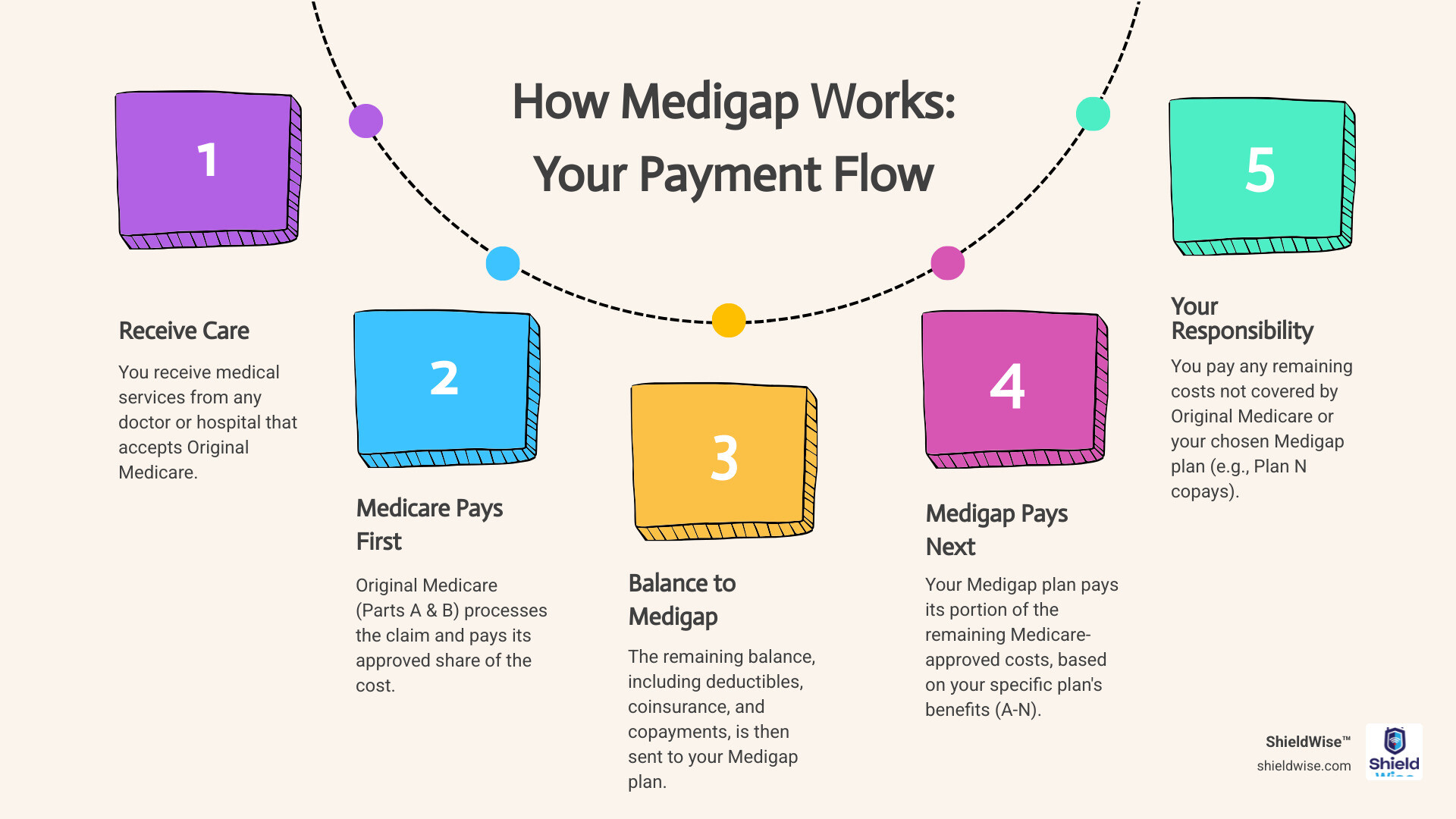
Original Medicare generally lets you use providers who take Medicare nationwide, subject to Medicare’s coverage rules. SELECT policies can add provider restrictions. Medigap pays its contracted share; remaining costs can include premiums, the Part B deductible, uncovered services and charges excluded by the particular policy.
Medicare Advantage
Advantage generally combines A/B benefits and often drug coverage, with plan-specific networks, approvals and cost sharing. Its medical out-of-pocket limit applies to covered A/B services under the plan’s rules; premiums, drug costs and excluded benefits are separate. Check extra-benefit limits and total costs, including Part B premiums.
Read our Advantage comparison guide and Medicare’s explanation of how Medigap works.
Common Questions
Should Popularity Decide My Choice?
No. A popular plan can still have premiums, remaining costs or buying restrictions that do not suit you. Compare your eligible options using current policy documents.
Does Medigap Cover Prescription Drugs?
Policies newly sold since 2006 do not include drug coverage. Many Original Medicare members choose a separate Part D plan, unless other suitable creditable drug benefits apply. Legacy policies need their own review. See our Part D guide.
Can a Medigap Application Be Denied?
Yes, outside a protected enrollment or guaranteed-issue situation, underwriting can affect acceptance and price. State law can add protections. Initial Medigap Open Enrollment and event-based guaranteed-issue rights have different rules, including pre-existing-condition protections.
Make a Documented Comparison
Record the plan letter and variant, premium, pricing method, remaining costs, eligibility protection and effective date. Resolve unanswered questions with the insurer or independent Medicare counseling before changing coverage. Our coverage-options guide provides related reading.