Why Understanding Medicare Part D Matters for Your Budget
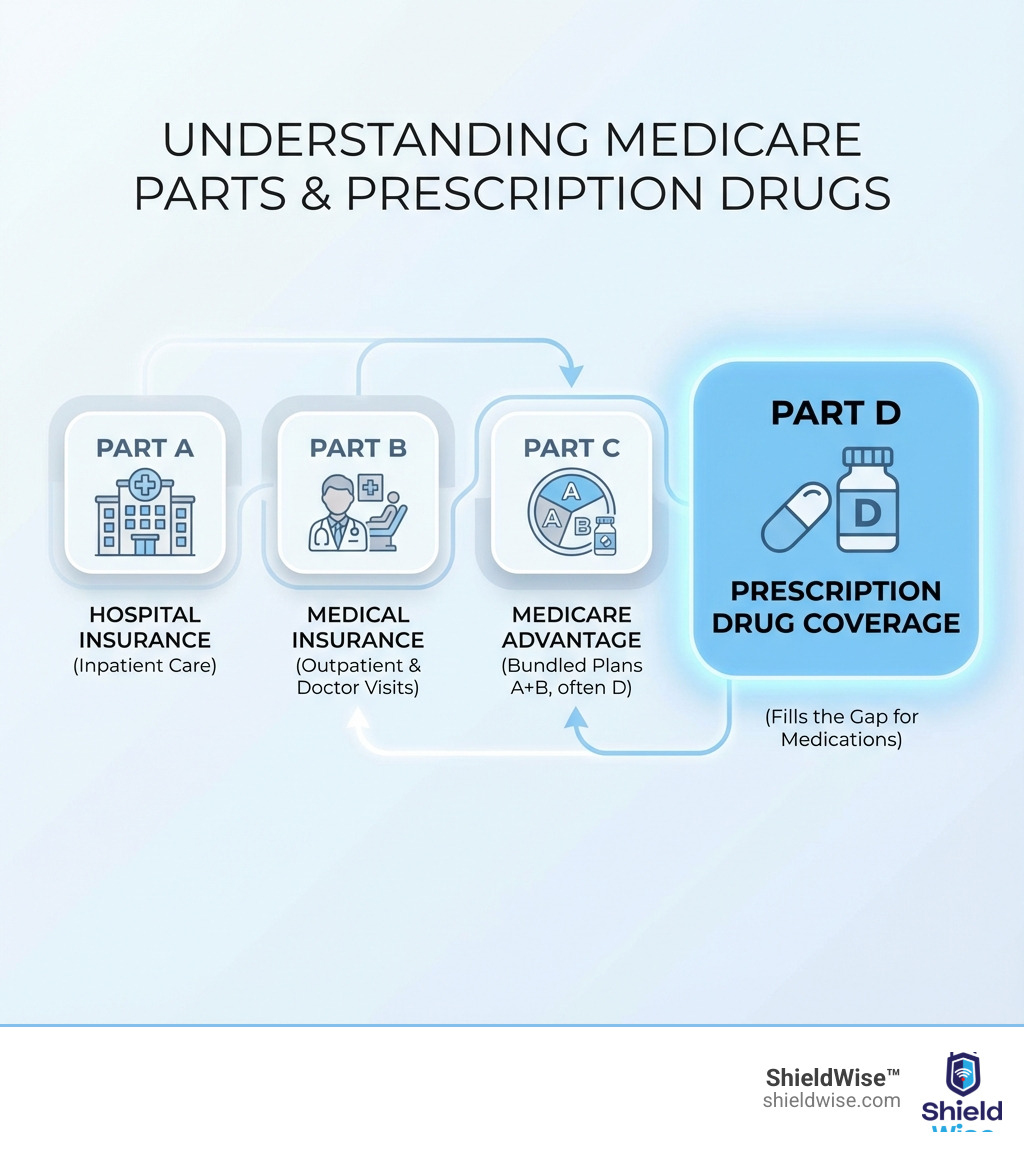
Medicare Part D helps pay for eligible prescription medicines through Medicare-approved private plans. Original Medicare leaves most medicines taken at home outside its coverage. Part D can be a separate drug plan or included in Medicare Advantage.
Reviewed October 13, 2026. The cost table separates 2026 coverage from 2027 coverage; use the benefit year you are choosing. A premium, a drug’s coverage and the pharmacy you use can all affect your spending.
What Is Medicare Part D and What Does It Cover?
A standalone Prescription Drug Plan normally goes with Original Medicare. Most Medicare Advantage plans include drug coverage. Check your current coverage before adding or changing a plan, because some combinations are restricted.
How Does Part D Cover My Medicines?
Each plan has a formulary, or covered-drug list. Check your exact medicine, strength and dosage. Plans use cost tiers, but tier numbers and names vary. A low premium is not enough if the plan does not cover the medicines you need.
Plans cover a broad range of medicines and most drugs in protected classes. That does not guarantee coverage for every drug or every use. Part A or Part B covers some medicines under its own rules. See Medicare’s explanation of drug lists and coverage.
How Medicare Part D Costs Work
The standard benefit has deductible, initial coverage and catastrophic stages. Some plans have a smaller deductible, cover certain tiers before it is met, or use different copayments. The standard initial stage uses 25% coinsurance; check your plan’s actual benefit.
| Part D amount | 2026 | 2027 |
|---|---|---|
| Maximum annual deductible | $615 | $700 |
| Annual out-of-pocket threshold for covered Part D drugs | $2,100 | $2,400 |
| Cost sharing after the threshold | $0 for covered Part D drugs | $0 for covered Part D drugs |
These limits apply to a calendar year. They are published by Medicare; the CMS standard-benefit guidance explains the 2026 stages.
What the Out-of-Pocket Limit Includes
The threshold counts qualifying spending on covered Part D drugs, including the deductible and certain payments made on your behalf. It does not cap every health expense. Premiums, Part B drug costs and purchases outside your Part D coverage are separate. Use your plan’s Explanation of Benefits to track what counts.
The Medicare Prescription Payment Plan spreads covered out-of-pocket drug bills across the remaining calendar year. It does not lower their total cost; bills can change as prescriptions are filled. Read Medicare’s payment-plan guidance before choosing it.
Premiums and Other Costs
Premiums vary by plan and location. Higher-income members may owe a separate Part D income adjustment, and a late-enrollment penalty may add to the premium. Compare the annual premium plus the cost of your prescriptions at your chosen pharmacy; do not use an old national average as a quote.
When and How to Join a Part D Plan
A standalone drug plan requires Part A or Part B. Medicare Advantage requires both. You must meet the plan’s eligibility and service-area rules, and use an applicable enrollment period.
- Initial enrollment: For most people turning 65, the window runs from three months before the birthday month through three months after it. Earlier Medicare eligibility has different timing.
- Annual Open Enrollment: October 15–December 7, with accepted changes starting January 1 of the next year.
- Special periods: Certain moves, coverage losses and other qualifying circumstances allow changes at other times; deadlines depend on the event.
Check the rules on Medicare’s joining-a-plan page. Related reading: Medicare Basics: Turning 65.
Avoiding the Part D Late-Enrollment Penalty
After initial enrollment, a gap of 63 consecutive days or more without Part D or other creditable prescription coverage may trigger a penalty. Creditable coverage is expected to pay at least as much as the standard Part D benefit; get your coverage’s written notice.
The monthly penalty generally equals 1% of the national base beneficiary premium for each full uncovered month, rounded to the nearest ten cents. It can change as that base changes and normally continues while you have Part D. Extra Help is an exception. This is not a percentage increase to your chosen plan’s own premium.
Managing Your Drug Coverage
Before enrolling, make a list of medicines, doses and pharmacies. Check the formulary and the plan’s rules:
- Prior authorization: Approval may be required before a prescription is covered.
- Step therapy: The plan may require trying a preferred treatment first.
- Quantity limits: The amount covered in a period may be limited.
If a rule does not meet your medical needs, you or your prescriber can request an exception with a supporting medical explanation. You can appeal a denial. Your clinician should guide treatment changes. See Medicare’s drug-plan rules.
Part D and Other Insurance
Ask your benefits administrator before joining Part D if you have employer, union, retiree, military or other drug benefits. Adding a plan may affect that coverage, including family members’ benefits. Do not assume all retiree plans pay first or that all other coverage is creditable. Medicare explains coordination with other insurance.
Help With Costs and Comparing Plans
Extra Help can assist eligible people with Part D premiums and other costs. Full Medicaid, a Medicare Savings Program or Supplemental Security Income can qualify someone automatically; others apply. Review current eligibility on Medicare’s help-with-drug-costs page, which links to the Social Security application.
Use Medicare Plan Finder for the year you need. Compare your drugs, pharmacy network, premiums, deductible, cost sharing and restrictions. Confirm details with the plan before enrolling. SHIP offers free, independent Medicare counseling.
Review Your Coverage Each Year
Your prescriptions, pharmacy preferences and plan benefits can change. Read the plan’s annual changes and compare the next benefit year before the applicable deadline. Keep your coverage notices and enrollment confirmation.
For related guides, visit our Medicare education articles. This article explains general rules; your plan documents and Medicare determine your coverage.