
Why End-of-Life Planning is a Final Gift to Your Family
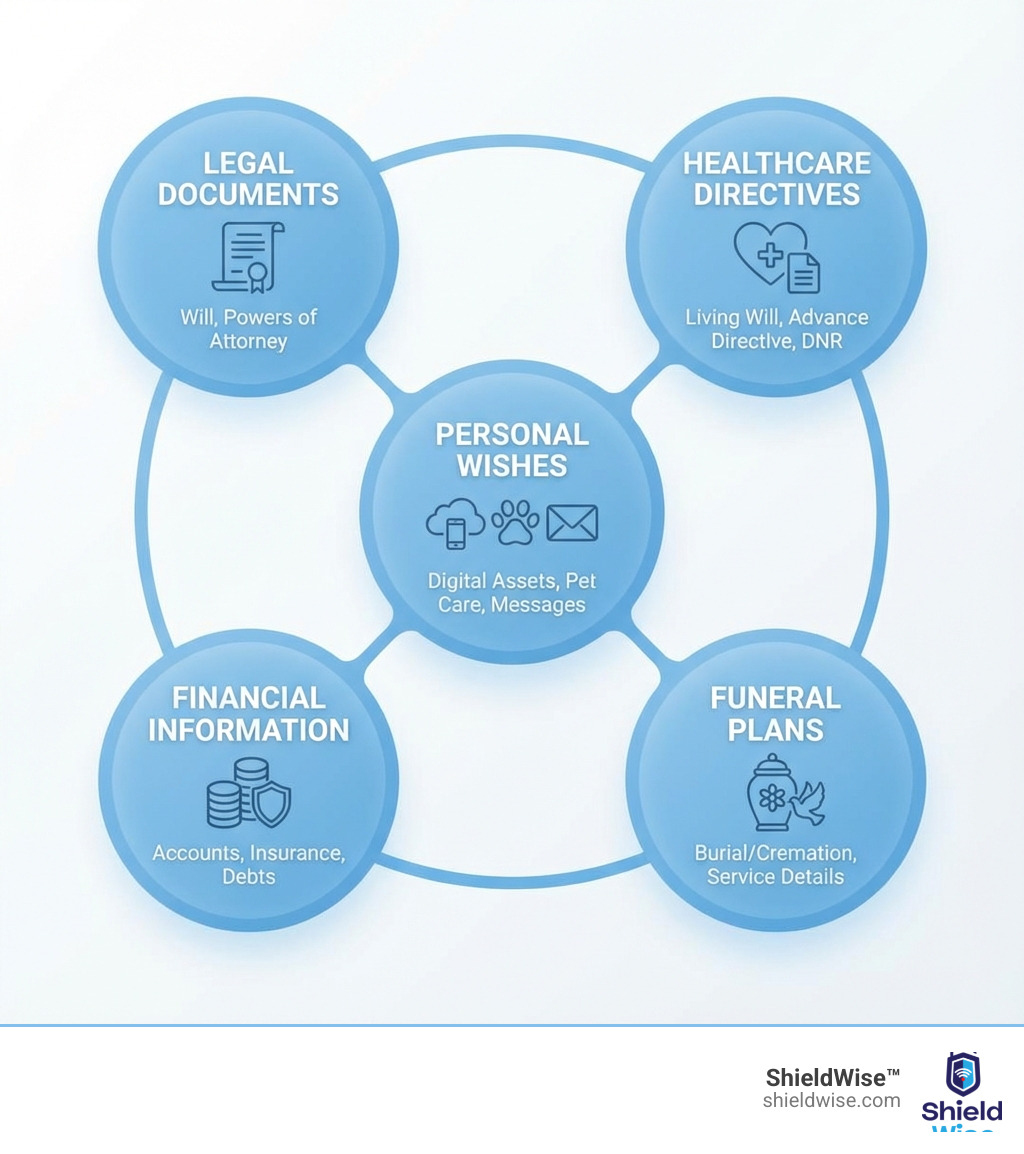
End of life planning checklist for seniors and families is more than a set of documents—it’s peace of mind for everyone you love. Here’s what you need to organize:
- Legal documents – Will, powers of attorney, advance directives
- Financial records – Bank accounts, insurance policies, debts, assets
- Healthcare wishes – Medical treatment preferences, DNR orders
- Funeral arrangements – Burial or cremation, service details, costs
- Personal information – Digital assets, passwords, pet care, messages to loved ones
Anyone who has dealt with a loved one’s passing knows how overwhelming it can be. You’re grieving while simultaneously making dozens of urgent decisions. Where is the will? What did mom want for her funeral? How do we access her bank accounts?
The statistics tell a sobering story. Only 20% of Americans have a will. Just 37% have created an advance directive for healthcare decisions. That means most families are left guessing what their loved ones would have wanted—often while dealing with complex legal and financial systems during the worst possible time.
End-of-life planning changes that. When you document your wishes and organize your information, you’re giving your family a roadmap. You’re reducing their stress, preventing potential conflicts, and ensuring your hard-earned assets go where you intend. You’re also making certain that your healthcare preferences are honored if you can’t speak for yourself.
This isn’t about being morbid. It’s about being responsible and caring. Think of it as one final act of love—removing burden and confusion when your family needs comfort most.
Step 1: Secure Your Legal and Healthcare Directives
Planning for the end of life involves making crucial decisions about our future healthcare and legal matters. It ensures our wishes are respected and that trusted individuals can act on our behalf if we become unable to. The statistics show that only 37% of Americans have a living will or advance directive, and only 26% have a durable power of attorney for health care. This leaves a significant gap where our preferences might not be known or followed during a time of incapacitation.
This step is about putting those essential documents in place. It’s about creating a clear path for your medical care and financial decisions, reducing the burden on your loved ones and granting you peace of mind. As the National Institute on Aging (NIA) highlights, preparing these documents can make all the difference in an emergency and at the end of life.
Last Will and Testament vs. Living Will
It’s common to confuse these two vital documents, but they serve very different purposes. Let’s break them down:
| Feature | Last Will and Testament | Living Will (Advance Directive) |
|---|---|---|
| Purpose | Dictates asset distribution, guardianship, and final wishes after death. | Specifies medical treatment preferences while you are still alive but incapacitated. |
| When Effective | Becomes legally binding only upon your death. | Becomes legally binding if you become unable to make or communicate medical decisions. |
| Key Decisions | Executor, beneficiaries, property distribution, guardianship for minors/pets, funeral wishes. | Life support, pain management, artificial nutrition/hydration, resuscitation (DNR). |
| Scope | Financial and personal estate matters. | Healthcare decisions only. |
| Probate | Typically goes through a court process called probate. | Does not involve probate; guides medical professionals directly. |
A Last Will and Testament is a legal document that outlines your wishes for what happens to your estate (property, money, and other assets) after you pass away. It allows you to:
- Appoint an Executor: This trusted individual will manage your estate, pay debts, and distribute assets according to your instructions.
- Designate Beneficiaries: You specify who receives which assets and how much.
- Appoint Guardians for Minors: If you have children under 18, you can name a guardian to care for them.
- Plan for Pet Care: You can also include instructions for the care of your beloved pets, ensuring they are looked after.
Without a will, state laws dictate how your assets are distributed and who manages your estate, which might not align with your desires and can lead to family disputes.
A Living Will, also known as an Advance Directive, is a legal document that expresses your wishes regarding medical treatment if you become unable to communicate them yourself. This is crucial for planning for potential incapacitation and ensuring your healthcare wishes are followed. It can cover:
- Medical Treatments: Which treatments you would accept or refuse (e.g., mechanical ventilation, dialysis).
- Life Support: Your preferences for prolonging life.
- Pain Management: How you wish pain to be managed.
- Do Not Resuscitate (DNR) Orders: A specific instruction not to be revived if your heart or breathing stops.
- Organ Donation: You can also use this document to express your desire to be an organ donor. A single organ donor can save up to eight lives and improve the lives of 75 others. We can register to become a national organ donor at organdonor.gov or visit our local department of motor vehicles.
While general principles apply, specific legal requirements for these documents can vary by state. We recommend consulting with an attorney in Illinois to ensure your documents are legally valid and reflect your specific wishes.
Powers of Attorney: Appointing Your Trusted Agents
Beyond your will and living will, Powers of Attorney (POA) are critical for ensuring someone can manage your affairs if you’re alive but incapacitated. Only 22% of Americans have a durable power of attorney for finances. These documents designate trusted individuals to make decisions on your behalf.
- Power of Attorney for Healthcare (Healthcare Proxy): This document names a healthcare proxy, a person who can make medical decisions for you if you are unable to communicate them yourself. This agent can provide consent for medical treatments and life-support decisions, ensuring your healthcare wishes are honored. They should be familiar with your values and preferences.
- Power of Attorney for Finances: This grants a trusted person the right to handle your legal and financial affairs. A Durable Power of Attorney extends to situations where you become incapacitated, allowing your agent to pay bills, manage bank accounts and investments, and handle other financial matters. This prevents your family from having to seek court approval to manage your finances during a crisis.
Choosing your agent for both types of POAs is a significant decision. Select someone you trust implicitly, who understands your values, and who is capable of making difficult decisions under pressure. Discuss your wishes thoroughly with them. For more information on Powers of Attorney, you can refer to resources like Powers of Attorney. While this specific link is from Ontario, the general principles of appointing a trusted agent and outlining their powers are universally applicable.
Step 2: Organize Your Financial and Personal Estate
Organizing your financial and personal estate is a profound gift to your family. It alleviates immense stress and confusion during an already difficult time. Imagine your loved ones trying to piece together your financial life, hunt for documents, or guess your online passwords while grieving. By taking this step, you provide a clear, comprehensive guide for your executor and family, making their tasks much smoother.
This isn’t just about money; it’s about ensuring your legacy is handled with care and efficiency. Creating a master document or “Life File” where all this information is compiled is a best practice. It acts as a central repository for everything from bank accounts to digital assets.
Financial Information and Pre-Planning Expenses
Gathering and documenting your financial information is a cornerstone of end-of-life planning. Here’s a list of essential financial documents and details to compile:
- Bank Accounts: Account numbers, bank names, contact information, and any online login details.
- Investment Records: Brokerage accounts, mutual funds, stocks, bonds, and contact information for your financial advisor.
- Retirement Accounts: 401(k)s, IRAs, pensions, and any beneficiary designations.
- Sources of Income: Details of pensions, Social Security, and other income streams.
- Liabilities and Debts: Mortgages, loans, credit cards, and any outstanding bills, along with due dates and payment methods.
- Life Insurance Policies: Policy numbers, company names, contact information, and designated beneficiaries.
- Tax Returns: Copies of recent federal and state income tax returns.
- Safe Deposit Box: Location, key, and contents.
- Property Deeds: Deeds for real estate, car titles, and other valuable assets.
Pre-planning for end-of-life expenses, particularly funeral or memorial arrangements, offers significant benefits. A traditional burial can range from $5,000 to $10,000, while cremations typically cost between $2,000 and $5,000. These are substantial costs that often fall on grieving families. By pre-planning, you can:
- Lock in Costs: Pre-paying for funeral arrangements can help lock in prices, saving your family from future inflation.
- Ease Financial Burden: It ensures that your family doesn’t have to worry about these expenses during a difficult time.
- Ensure Wishes are Met: You can carefully plan every detail, from the type of service to the disposition of your remains.
Understanding these costs is crucial. For more details on what these expenses entail, visit our guide on What are Final Expenses?.
The Role of Life Insurance in Your Plan
Life insurance plays a vital role in end-of-life financial planning, offering a financial safety net for your loved ones. It can serve several critical purposes:
- Covering Debts: The death benefit can pay off outstanding mortgages, car loans, credit card debts, and other liabilities, preventing them from becoming a burden on your estate or family.
- Replacing Income for a Spouse or Dependents: If you are a primary earner, life insurance can provide an income stream for your family, allowing them to maintain their lifestyle and cover ongoing living expenses.
- Leaving an Inheritance: Beyond covering costs, life insurance can leave a substantial inheritance for your beneficiaries, contributing to their financial future.
- Paying for Funeral Costs: Final expense life insurance is specifically designed to cover funeral and burial costs, ensuring your family isn’t left with this immediate financial strain. Learn more about your options with End of Life Insurance for Seniors and Final Expense Insurance.
It’s essential to align your life insurance beneficiary designations with your will. Beneficiary designations on life insurance policies typically supersede instructions in a will, so ensure they reflect your current wishes. This helps prevent conflicts and ensures your intended recipients receive the benefits.
The Ultimate End of Life Planning Checklist for Seniors and Families

This section provides a comprehensive, actionable end of life planning checklist for seniors and families to cover all remaining practical details, ensuring nothing is left to chance.
Funeral and Memorial Arrangements
Deciding on funeral and memorial arrangements in advance is one of the most compassionate acts you can perform for your family. It removes the guesswork and stress during their grief.
- Burial vs. Cremation: Clearly state your preference. If cremation, specify what should be done with your ashes (e.g., kept by loved ones, scattered in a favorite place).
- Service Preferences: Outline the type of service you desire (e.g., religious, secular, celebration of life), its location, and any specific readings, music, or speakers.
- Obituary Information: Provide key biographical details, accomplishments, and individuals you wish to be mentioned. You can even draft your own obituary to ensure it reflects your life as you see it.
- Pallbearers: List individuals you would like to serve as pallbearers.
- Notifying Friends and Family: Provide a list of key contacts to be informed of your passing.
- Pre-Arrangements: Consider making arrangements directly with a funeral home or crematory. The Federal Trade Commission (FTC) offers tips on planning a funeral to help you steer this process.
A complete end of life planning checklist for seniors and families: Digital Assets and Personal Wishes
In our increasingly digital world, your “digital estate” is just as important to manage as your physical one. Our digital estates grow more complex daily with social media, electronic banking, and cloud storage. What is a Digital Estate? highlights the need to plan for these.
- Password Manager: Use a secure password manager (e.g., LastPass, 1Password) to store all your online login credentials. Ensure your executor or a trusted individual has access to this manager, perhaps through an emergency access feature or a sealed recovery kit.
- Social Media Accounts: Decide what should happen to your social media profiles (e.g., memorialized, deleted). Most platforms have options for this.
- Online Banking and Financial Accounts: Provide clear instructions and access for online banking, investment platforms, and e-commerce accounts.
- Digital Photos and Files: Specify how digital photos, videos, documents, and other files stored in cloud services (Google Drive, Dropbox) or on devices should be handled.
- Instructions for Pets: Beyond your will, provide detailed, day-to-day care instructions for your pets (feeding schedule, vet contacts, favorite toys, habits).
- Distributing Personal Items: Make a list of specific personal belongings and who you wish to receive them. You can even start distributing meaningful items now.
- Letters to Loved Ones: Consider writing personal letters or recording video messages to be delivered after your passing. These can be incredibly comforting for your family.
Keeping Your Plan Up-to-Date
An end-of-life plan isn’t a one-and-done task; it’s a living document. Life changes, and your plan should evolve with it.
- Reviewing Documents Annually: Schedule an annual review of all your end-of-life documents. This ensures they still reflect your wishes and are legally sound.
- Life Event Triggers: Revisit your plan after significant life events, such as:
- Marriage, divorce, or remarriage.
- Birth or adoption of a child or grandchild.
- Death of a spouse, child, executor, or beneficiary.
- Significant changes in financial circumstances (inheritance, large purchase or sale of assets).
- Moving to a new state (as laws can vary).
- Changes in health status.
- Updating Beneficiaries: Always ensure beneficiaries on life insurance policies, retirement accounts, and other financial instruments are current and align with your overall plan.
- Communicating Changes: Inform your executor, healthcare proxy, and trusted family members about any updates or changes to your plan and the location of your documents.
Step 3: Involving Family and Finding Support Resources
Bringing your family into the end-of-life planning process can feel daunting. It touches on sensitive topics like mortality and grief. However, open communication is essential to ensuring your wishes are understood and to normalize discussions about death. This proactive approach can significantly reduce family conflict and stress down the line. Organizations like The Conversation Project emphasize the importance of these conversations.

How to Involve Your Family in the End-of-Life Planning Process
Initiating these conversations might be uncomfortable at first, but it’s an act of love. Here’s how we can involve our families effectively:
- Schedule a Family Meeting: Choose a calm, comfortable setting and time when everyone can focus. Explain that this is a gift to them, designed to ease future burdens, not to be morbid.
- Explain Your Wishes and Document Location: Clearly articulate your decisions regarding healthcare, finances, and funeral arrangements. Crucially, tell them where all your important documents are stored (e.g., fireproof safe, lawyer’s office, digital safe).
- Answer Questions: Be prepared to answer their questions honestly and patiently. This is a dialogue, not a lecture.
- Designate Roles: Officially communicate who you’ve chosen as your executor, healthcare proxy, and financial power of attorney. Explain why you chose them and what their responsibilities will be.
- Create a Shared Understanding: The goal is for everyone to be on the same page, reducing misunderstandings and potential disputes when emotions are high.
A guide to resources for your end of life planning checklist for seniors and families
Navigating end-of-life planning doesn’t have to be a solitary journey. Numerous resources and support systems are available to assist seniors and families:
- Elder Law Attorneys: These legal professionals specialize in estate planning, wills, trusts, and powers of attorney, ensuring your documents comply with Illinois state laws.
- Financial Advisors: They can help you organize your financial assets, plan for long-term care, and ensure your estate is structured efficiently.
- Grief Support Groups: While planning, or after a loss, these groups offer emotional support and a community for those coping with grief. Resources like Bereaved Families of Ontario (while Canadian, similar organizations exist across the US, and this link demonstrates the type of support available) provide emotional support.
- Government Resources: The Eldercare Locator, reachable at https://eldercare.acl.gov, can connect you to local resources for seniors and caregivers.
- Hospice and Palliative Care Organizations: These organizations provide valuable information on end-of-life care options and support services.
Frequently Asked Questions about End-of-Life Planning
What happens if I die without a will?
Dying “intestate” (without a valid will) means you surrender control over your estate to the state. Instead of your wishes being followed, Illinois state laws will dictate how your assets are distributed. A probate court will appoint an administrator to oversee your estate, and your property may be divided among your closest relatives according to a predetermined formula, which might exclude individuals you wished to benefit, or include those you didn’t. This can lead to significant delays, increased costs, and potential family disputes, adding immense stress to your loved ones during an already difficult time. Your wishes for specific heirlooms, charities, or even the care of your pets would not be legally binding. For more information on the complexities of dying without a will, it’s clear that taking the time to draft this document is invaluable.
What are the first steps to take after a loved one passes away?
The period immediately following a death can be overwhelming. While specific legal processes vary by location, here are general first steps to guide you:
- Obtain a Legal Pronouncement of Death: This is typically done by a doctor, coroner, or hospice nurse.
- Notify Close Family and Friends: Inform immediate family and close friends.
- Arrange for Transport: Work with a funeral home or crematory to arrange for the deceased’s body to be transported.
- Locate the Will and Other Documents: Find the deceased’s will, funeral instructions, life insurance policies, and other important papers.
- Notify the Executor: Inform the person named as executor in the will. They will be responsible for managing the estate.
- Begin Funeral Arrangements: If pre-planned, follow the deceased’s wishes. If not, begin making decisions with family.
- Obtain Death Certificates: You will need multiple certified copies for various administrative tasks (e.g., insurance claims, closing accounts).
While the Government of Canada provides guidance on next steps, the general sequence of actions remains similar across different regions.
How can I ensure my pets will be cared for?
Our pets are cherished family members, and ensuring their well-being after we’re gone is a common concern. Here’s how we can plan for their future:
- Include Pets in Your Will: You can name a specific caregiver for your pets in your will. This is a legally binding way to designate who will look after them.
- Create a Pet Trust: For more robust and detailed care, consider establishing a pet trust. This legal arrangement sets aside funds for your pet’s care and names a trustee to manage those funds and a caregiver to provide daily care.
- Name a Specific Caregiver: Discuss your wishes with a trusted friend or family member who is willing and able to take on the responsibility. Ensure they understand the commitment involved.
- Provide Funds for Their Care: Allocate sufficient funds in your will or pet trust to cover your pet’s food, veterinary care, grooming, and other expenses for their lifetime.
- Write Detailed Care Instructions: Compile a comprehensive document outlining your pet’s routine, dietary needs, medications, veterinary history and contact, behavioral quirks, and favorite toys or activities. This will help their new caregiver provide seamless care.
Conclusion: Secure Your Legacy and Protect Your Loved Ones
Preparing an end of life planning checklist for seniors and families is truly one of the most profound gifts you can bestow upon your loved ones. It’s a proactive step that transforms uncertainty into clarity, stress into peace, and confusion into comfort. By carefully documenting your wishes and organizing your affairs, you ensure that your voice is heard, your preferences are honored, and your family is spared from making difficult decisions during their grief.
We understand that these conversations and preparations can be challenging. That’s why ShieldWise™ is here to provide guidance and support, helping you steer these important choices. By creating a thorough plan, you provide clarity and comfort to your family during a difficult time, ensuring your final wishes are respected.
Learn more about covering End of Life Expenses and let us help you secure your legacy and protect those you love most.